Sunday, January 16, 2022

A Kind of Spark

 McNicoll, Elle. A Kind of Spark
October 19th 2021 by Crown Books for Young Readers
Copy provided by Young Adult Books Central

Addie lives in the small Scottish town of Juniper, not far from Edinburgh with her parents and older twin sisters. Nina has a vlog for makeup tips, and Keedie is at university. Keedie is especially helpful to Addie, since both are on the autism spectrum. They both struggle with loud noises, too much stimulation, and people who don't understand their different needs. Keedie has become good at "masking", and people at university don't know about her differences, but Addie is suffering at school. Her teacher, Ms. Murphy, is very mean; she even rips up Addie's paper because her handwriting is poor, and frequently yells at her. Addie's former best friend Jenna will no longer talk to her, deciding instead to hang out with Emily, who routinely makes fun of Addie. When the history of Juniper and its treatment of witches is covered in class, Addie feels a kinship with the women who were tortured and killed just for being different. Along with Audrey, a new girl from England who takes her side, Addie sets out to approach the town government for a memorial to the women who were killed. There are missteps along the way, but Addie learns a lot about herself, her family, and the way that society treats those who are different. 

While the phrase "own voices" has fallen out of favor, it is important to note that the author self identifies as neurodivergent. Books like Rorby's How to Speak Dolphin and Baskin's Anything But Typical, offer good representations of characters on the autism spectrum, but there are other books by neurotypical authors that miss the mark. Addie's frustrations and challenges are clearly defined, and she has a decent support network and a few soping strategies. Her struggles at school and with friends are well drawn and realistic. The tie in with the witches in Juniper's history showcases how treatement of individuals who are different has changed over the years, and it's an interesting connection for Addie to make. 

The one thing I found surprising was Ms. Murphy's treatment of her student, which would not go over well in the US. My school has had an autism unit for over 15 years, so perhaps we are more used to seeing and dealing with neurodivergent children. Jenna's behavior seems more in line with reality, since many friendships are strained while growing up, and having a friend who regularly melts down in class is challenging even for the most understanding friend. 

Just as it is a bit less common for girls to be on the autism spectrum, it is harder to find them reflected in books. Kapit's Get a Grip, Vivy Cohen! and Lupica's Team Players do offer glimpses into such characters, but Addie is a welcome addition to the list. It's a good idea to investigate newer titles when dealing with many topics, since diagnoses, treatment, and public perception can change over time. 

A Kind of Spark is a fast paced, interesting read set in an intriguing part of the world for US readers, and dealing with history that might be unknown. Addie's struggles are universal, and will appeal to readers who want to investigate what the tween years are like for others who might not have lives exactly like theirs. 

Saturday, January 15, 2022

Big Shot

Kinney, Jeff. Big Shot (Diary of a Wimpy Kid #16)
October 26th 2021 by Amulet Books
Copy provided by Young Adult Books Central
 
As squirrely as Greg is, he's never been portrayed as a sports fanatic, and we find out why in Big Shot. No matter what sport he's tried, from soccer as a kindergartner to baseball to field day, he's been a spectacular failure. This is fine as far as he is concerned; sports, to him, are more about the snacks. He'd much rather be playing video games, but his mother, a former basketball player, is determined to get him to play something. Eventually, he agrees to try out for a basketball team, thinking that there is no chance he will make it. When star player Preet doesn't make the team because he's out of town for try outs, his father puts together a team of all of the players who were cut... including Greg! They are predictably bad, have horrible gym schedules, and can't even hold their own against a group of older men who are practicing in the gym they've reserved. They don't win a single game. When Greg's mother finds out about a tournament for teams that haven't won a single game, she is eager to enter them, hoping that under her coaching, they will be able to win and she can rectify her own fraught basketball past.

Like most Wimpy Kid books, this is a bit light on plot, focusing instead of humorous anecdotes about situations such as Greg at his father's gym, an unlikely Field Day fixing scheme, an adventure at a major league baseball stadium, and a rivalry with the nearby town of Slacksville. This narrative structure must be wildly appealing to the target demographic, but causes me to struggle. Big Shot has more of a plot arc than Hard Luck, but not as much as The Getaway. 

We see very little of Rowley in this installment, which is okay. I worry about his toxic relationship with Greg, but here he only has to deal with Greg hosting him for "tasting parties" for the weird snacks his mother buys. Haddock Skin Chips, Sweet Potato Cookies or Seaweed Bars, anyone? Greg does try his best to be a good team mate and sportsman, even if his efforts are sometimes misguided. There is even some talk of the team getting together again, but Greg thinks it might be wise to quite while he's ahead. 

The big appeal of these books is partly due to the line illustrations and hand drawn style of font that gave rise to the trend of Notebook Novels. Other competitors in this field are Peirce's Big Nate, Kalicky's My Life in Smiley, and Pichon's Tom Gates, which have similar formats but differing levels of plot and character development. With the addition of sports, even with Greg's somewhat negative take on them, this will be a hugely popular title. 
 Ms. Yingling

Friday, January 14, 2022

All Star: How Larry Doby Smashed the Color Barrier in Baseball

Vernick, Audrey and Chapman, Cannady (illus.) All Star: How Larry Doby Smashed the Color Barrier in Baseball 
January 4th 2022 by Clarion Books
E ARC provided by Edelweiss Plus

In this picture book biography, we see young Larry Doby follow a typical course of life for his time period; growing up in the segregated South but still playing sports with all manner of neighborhood children, having to join the Navy, and playing in the Negro Leagues before being signed by the Cleveland Indians (now Guardians) eleven weeks after Jackier Robinson was the first Black player in the major leagues. Doby faced much of the same prejudice and discrimination that Robinson did, but persevered. The last team to finally sign a Black player did so in 1959. There were still issues, but Doby did get to experience a number of "firsts" to take some of the sting out of being the "second". Notes, a photograph, and a selected bibliography round out the book. Vernick has baseball chops (2014's Screaming at the Ump), and Chapman's illustrations have a charming, 1950s reading texbook feel to them,and are heavy on red, blue, and sand colors. (TO be clear, I love 1950s reading textbooks!) This is a great addition to a collection of sports picture books, or picture books about pioneers in the area of Civil Rights. 

 
How cool is this Pitch to Plinth Project?
 

Ms. Yingling

Thursday, January 13, 2022

Bones Unearthed! (Creepy and True #3)

Hollihan, Kerrie Logan. Bones Unearthed! (Creepy and True #3)
November 23rd 2021 by Abrams Books for Young Readers
Copy provided by Young Adult Books Central

Didn't we all dig in the yard or an empty lot when we were ten and hope that we would unearth some sort of archaeological find? In my case, it was only a rock in the shape of Ohio, but it certainly ignited enough of an interest that I took several courses in ancient archaeology at university. Hollihan's introduction to the book, which covers the many things she needed to learn about in order to research the book, is a great starting point for budding archaeologists. 

There are several prominent but not overly well known excavations covered in this book, including ones uncovering King Richard, bodies affected by Krakatoa and Tambora, bones found in Benjamin Franklin's basement, an early English settlement in the US that experienced hard times, and even information on human offerings! Each dig has the history behind it nicely explained, as well as information about how the excavation proceeded and what information was added to history because of it. 

There are plenty of photographs, and the book is well designed, with page decorations reminscent of crackling bones, as well as lovely full color edgings. There are pages with "factlets", a lot of primary source quotations, and explanations of terms and places. There are endnotes, a selected bibliography, and a helpful index. 

Like this author's Mummies Exposed! and Ghosts Unveiled , Bones Unearthed! capitalizes on the human desire to explore the creepy and somewhat frightening aspects of life and death. Adults have murder mysteries; these are discouraged for some reason for the under twelve crowd, so nonfiction books about the spooky and strange are a great way to feed that longing. Pair this with Albee's  Accidental Archaeologists: Chance Discoveries That Changed the World or Fleming's The Curse of the Mummy: Uncovering Tutankhamun's Tomb for information about archaeology or Williams' True Hauntings: Deadly Disasters or  Braggs' How They Croaked for general horrible endings!
 

Ms. Yingling

Wednesday, January 12, 2022

Overground Railroad and Ain't Burned All the Bright

Taylor, Candacy. Overground Railroad: THe Green Book and the Roots of Black Travel in America
January 4th 2022 by Amulet Books
E ARC provided by Edelweiss Plus 

This was very well researched and covered a lot of additional history of the Black experience in the US, not just travel. I loved that the author traveled to different places mentioned in the Green Book, and took photographs of places that were listed in the travel guide, very few of which still exist. The personal connections to her family were interesting as well. The small things that you would only know about if you lived through an era, like the fact that many Black men who had nicer or newer cars kept chauffeur's caps in the car in case they were stopped by the police, are invaluable. The photographs are excellent, and this book has excellent, in depth coverage of an important period in time. 

This was an adaptation for young people of a longer book, which is great, but was still a bit longer than I wanted. If I have moeny left over, I will buy this, since it would be helpful for research for National History Day. What I'm looking for is something somewhere between this amount of information and Dawson and Harris' Opening the Road: Victor Hugo Green and His Green Book. 

I'm fascinated by the digitized collection of the original guide books accessible through the New York Public Library: https://digitalcollections.nypl.org/collections/the-green-book#/?tab=about

From the publisher:
A young reader's edition of Candacy Taylor’s acclaimed book about the history of the Green Book, the guide for Black travelers
 
Overground Railroad chronicles the history of the Green Book, which was published from 1936 to 1966 and was the “Black travel guide to America.” For years, it was dangerous for African Americans to travel in the United States. Because of segregation, Black travelers couldn’t eat, sleep, or even get gas at most white-owned businesses.

The Green Book listed hotels, restaurants, department stores, gas stations, recreational destinations, and other businesses that were safe for Black travelers. It was a resourceful and innovative solution to a horrific problem. It took courage to be listed in the Green Book, and the stories from those who took a stand against racial segregation are recorded and celebrated.

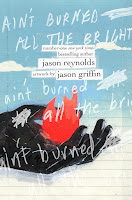
Reynolds, Jason and Griffin, Jason. Ain't Burned All the Bright. 
January 11th 2022 by Atheneum/Caitlyn Dlouhy Books 
E ARC provided by Edelweiss Plus

I somehow missed this one, but it was brought to my attention by one of the teachers, who wanted to know more about it before buying it.

This is a difficult book to review, so I suggest picking up a copy for yourself. It is a very quick read, perhaps 4-6 pages of text as it would be arranged in a traditional novel, but the words are arranged like poetry on highly decorated pages. I was concerned about content, since Reynolds often writes Young Adult Books, but this would be fine for middle school readers. Elementary school readers might benefit from support in reading this in order to fully understand it. The story isn't so much told to us as presented, and it's up to the reader to tease out what is going on. It reminded me a bit of when I was told to teach Latin inductively rather than deductively.

Thematically, this covers the events of 2020 from the view of a young Black boy at home with his family. His mother is obsessed with the news, which is highly repetitive and unpleasant; his father is ill and coughing; his brother plays video games constantly; his sister is on her phone. The boy wonders why the news has so much about racial issues in it, but also why these issues never seem to change.

The illustrations are collage style. This is a very unusually formatted book, so it's hard to gauge student interest. Certainly, libraries where Reynolds' work is popular will want to take a look. I have a teacher who is very passionate about his work, so the book might circulate on the strength of her recommendations.

Tuesday, January 11, 2022

Operation Do-Over

Korman, Gordon. Operation Do-Over
January 11th 2022 by Balzer + Bray
E ARC provided by Edelweiss

Mason and Ty were destined to be best friends. From a very young age, they shared many interests and character traits. They were constantly together, and their families supported them; Mason's keeping nut free snacks for Ty and Ty's stocking the kind of chips that didn't irritate Mason. When "the most awesome girl who ever lived" moves to town, both boys are smitten. Their nerdy hearts thrill to her love of science and time travel, and she's just a nice person. Even though the sporty bullies Dominic and Miggy try to claim her, she decides to hang out with the friends, as well as Clarissa. Mason and Ty realize that they both are interesteed in Ava, so they form a treaty, just like the Klingons and Romulans. Neither will pursue her. Unfortunately, this doesn't work very well, since Ava really likes Mason. He tries to avoid her, but when the two end up at the Harvest Festival together during a horrible pop up storm, they are caught kissing on camera. Ty sees the photo and that's the end of the friendship. Fast forward five years: Mason is a senior, and a lot has happened in his life. His parents have divorced, his beloved dog Rufus was killed while chasing a Roto-Rooter truck, and he and Ty are not friends. After a fracas at school that ended in his favorite teacher being injured, Mason is expelled, and soon after is in a car accident. 

When he wakes up, he's 12 again, and at a school sleepover to watch a meteor shower. He is confused, but retains his memories of the intervening years. He knows, for example, that Mason and Ty were the ones who snuck into the sleepover and poured hydrogen peroxide on some students. Once he realizes he's stuck in the past, he tries to fix things. He starts cleaning up after his father, training Rufus to ignore trucks, and steers clear of Ava as much as he can. He even stands up to Dominic, flattening him with a tackle when he snatches Ty's back pack, and tries out for the football team in order to change his destiny. It works for a while, but Ty becomes irritated at how mean Mason is to Ava. After meeting Madame Zeynab, a local fortune teller, while out with the football team, Mason tries to find her again to eleaborate on why she thinks he has "two futures". The one event he tries desperately to avoid is the Harvest Fair, but he doesn't manage. The events unfold too closely to the way they did the first time, despite all of his efforts. Will he be able to salvage his relationship with Ty the second time around?

This novel struck a chord in me, and is probably my favorite Korman title so far. If I could go back to 8th grade and get a second chance, I would change just about everything about my entire life. I identified very strongly with Clarissa, who is another smart girl, but one whom the boys don't like. Her conversation with Mason in his second twirl through being 12 was heartbreaking, but I loved how Mason encouraged her to try out for the track team, and how her adversarial relationship with Ty shook out. I also found it endearing and very realistic that Mason not only tried out for the football team in his second chance, but stayed on it into high school, despite his childhood clutziness. Middle schoolers often explore different identities, but also often feel that they can't make any changes, so this was just interesting to see. Ava was a fantastic characters who was smart, funny, and extremely kind. It was hard to watch Mason be mean to her, even though his motives were clear. 

There aren't as many books about boys' friendships as there should be, and it was heartwarming to see Ty and Mason's relationship. Bonding over shared interests, they supported each other in school, and created their own safe space, away from the Dominics and Miggys of the world. I loved seeing them in high school after Mason's trip to the past, but I don't want to ruin the ending!

Korman always crafts intriguing, original stories with moments of humor and more realistic middle grade concerns. Seeing Mason use his older perspective to try to deal with his friendship with Ty, parents' relationship problems and the loss of his beloved pet was fascinating, and addresses concerns that many children have. Hand this to avid fans of this author's work, and to readers who enjoy Jordan Sonnenblick, Paul Acampora, and Dan Richards. 

Monday, January 10, 2022

MMGM- The Deadliest Hurricanes Then and Now

It's
Marvelous Middle Grade Monday
 at 
and #IMWAYR day 
at 
and 
Hopkinson, Deborah. The Deadliest Hurricanes Then and Now (The Deadliest #2)
January 4th 2022 by Scholastic Focus
E ARC provided by Edelweiss Plus

Like this author's The Deadliest Diseases Then and Now, this second installation in the series covers information about hurricanes and the science behind them, illustrating these concepts with information about the Galveston Hurricane of 1900. It differs somewhat from the first book in that it is a deep dive into many facets of the Galveston storm, instead of covering several different storms, although a few others are mentioned briefly. This gives the book a chance to address issues I hvaen't seen mentioned before, such as the disdain with which the Cuban meteorological society and their reports were treated, and how disproportionately affected the Black and impoverished neighborhoods were. I especially liked that the Cuban scientists and the Black citizens in Galveston, were not just depicted as victims, but were given plenty of space so that their accomplishments could be lauded, making their treatment all the more painful. Of course, the big draw for this book is descriptions of how people survived, or didn't survive, the storm. Especially informative was the coverage of how males of all ages were conscripted to help bury or burn the bodies, and of how they stepped up to do this horrific work without complaint. Complete with period photos, weather maps, a timeline, brief biographies of key players and a select bibliography, this is another great nonfiction title to hand to fans of Tarshis' I Survived books. I'm looking forward to the third book in this series, The Deadlist Fires. (May 3, 2022)

Sunday, January 09, 2022

Code Name Serendipity

Smith, Amber. Code Name Serendipity
January 4th 2022 by Razorbill
E ARC provided by Edelweiss Plus

Sadie lives with her moms and her older brother Noah, who constantly gives her a hard time. Her best friend has moved away, and while they can still text, it's not the same, especially since she feels lonely at school. When there's no French toast for breakfast one weekend morning, it is a bad sign; Sadie's grandfather has been struggling with memory issues, and is coming to live with Sadie's family. In some ways, this is great. Sadie can talk to him when she gets home from school, and the two have a good time together. But even she can see that his memory is failing, and there are a couple of scary incidents because of this. At the same time, Sadie finds a dog outside who seems to call to her. She can communicate telepathetically with Dewey, as the dog calls herself. Since one of her moms is a vet, Sadie knows she's not supposed to approach strange dogs, and eventually Dewey shows up in her mom's shelter. At school, where she struggles with a learning disability she tries to hide from her classmates, she has at least made anew friend in Macey, a girl with whom she had not previously gotten along because of an earlier misunderstanding. Macey has struggles of her own, and the two are soon hanging out. Macey even tries to help Sadie with a plan to get Dewey out of the shelter, but when that falls through, her gradfather comes to the rescue. He sets up a shed near the house as a "puppy palace", and they bring Dewey home, lying to the shelter and saying she is their lost dog. They make plans to eventually tell the moms, but how long can they keep up the ruse before they are found out?
Strengths: The fact that Sadie has two moms is a nonissue, although she does explain it to Macey. Macey's mother is deceased, so she had her own family information to exchange. I adored Macey's grandmother and thought it was great she was more formal. Sadie's friendships were realistically portrayed. Her learning difficulties are addressed in a mostly ocnstructive fashion, and her mothers are supportive. Noah is a jerk, but that's also fairly realistic. I'm always interested in stories with good grandparents, and this would be great for fans of Gebhart's There Will be Bears, Acampora's How to Avoid Extinction, Cavanaugh's When I Hit the Road, or Medina's Merci Suarez Changes Gears.
Weaknesses: I'm never a fan of people lying and then getting their way. The fact that the grandfather also lies makes this worse. I also wish that assisted living facilities weren't portrayed as horrible choices for older adults with memory issues, although this did at least spin things positively later in the book. With my mother, the choice was either assisted living, or continuing to ler her live with my father, who would let her do things that would lead to her falling on her face. Assisted living was an immense improvement to her quality of life. 
What I really think: This is definitely speculative fiction; there is repeated communication between Sadie and Dewey. I will probably pass on purchase, but I can see this being popular in an elementary school library. 
 Ms. Yingling

Saturday, January 08, 2022

The Puppy Problem (The Daily Bark #1)

James, Laura and Alder, Charlie. The Puppy Problem (The Daily Bark #1)
January 11th 2022 by Bloomsbury Children's Books
ARC provided by the publisher

Gizmo is very happy with his life with Granny, but when she moves from the fascinating city to the country town of Puddle, he is a bit asea. He tries to make some friends, and comes across a neighbor dog, Jilly, who is a gigantic Irish Wolfhound who has four very young puppies. Jilly is worried that her human will sell the puppies to families far away, and she will never get to see them. She enlists Gizmo's help to find local families for them. Along the way, Gizmo makes other new friends, including Lola, who loves to run, Bunty, who lives at Willow Tree Farm, Bob, the station dog, and Bruno, whose owner has a salon. Gizmo borrows Granny's typewriter and makes a flyer about the puppies, then gives copies to other dogs in town to spread the word. Luckily, there is enough local interest in Jilly's pups that they are all adopted close to home. Gizmo also finds out that Jilly is not able to read, and teaches her this new skill. 
Strengths: The illustrations in this were absolutely adorable, and I can't be the only one who has a soft spot for early reader books about dogs! Gizmo is a fascinating character, and he has his own life apart from Granny, who actually isn't present in the book much at all. He and his friends identify the problem, think of solutions, and try to use their skills to implement their best idea. This is a nicely sized, small book, with color illustrations in the finished edition-- mainly purple, aqua, and brown with pops of red. It's a feel good story, both with Jilly's concerns for her puppies and with her learning to read. I'll be interested to see the next book in the series. 
Weaknesses: I found it a little odd that the humans were not involved in having Jilly's puppies adopted; after getting Pongo from Ohio Fuzzy Pawz, I think it's a great idea for people to have to fill out five page applications and families to be thoroughly investigated before having a dog placed with them. The target demographic of six year olds will NOT be thinking about this. 
What I really think: Clearly, I enjoy this beginning chapter books about animals a little too much. Ahn's Pug Pals, Peter's Jasmine Green series, Higgins's Home is Where the Heart Is (Good Dog #1), Clarke's Posy the Puppy (Dr. Kitty Cat #1) , Butler's King and Kayla, are all ones that I adored, and the bit longer (and my favorite) Falatko's Two Dogs in a Trench Coat Go to School has only a slightly harder reading level.
Ms. Yingling

Friday, January 07, 2022

Guy Friday- My Life as a Billionaire

If you don't have this series in your middle school or elementary library, you really need to look into getting them in prebind. They are the perfect book to hand to students who obsessively reread Wimpy Kid books or graphic novels. Along with the Charlie Joe Jackson and Stick Dog books, these are my go to titles for slowly expanding readers' choices when they need a suggestion for something new that also feels familiar. 

Tashjian, Janet. My Life as a Billionaire (My Life #10)
April 6th 2021 by Henry Holt & Company
Library copy

Derek spends the day working for his friend Matt's brother, and is supposed to get $40 for his efforts. When Jamie doesn't have any cash at the end of the day, he tries to give the boys lottery tickets instead. Disappointed that he isn't any closer to buying the 3-D printer that he wants, Derek still takes the ticket. When the news is on, and he hears numbers that sound familiar, he is surprised to find that the ticket is actually a winner. His mother points out that he is too young to claim the money himself, and events proceed very realistically. He and Jamie agree to split the money, and their parents dissuade them from getting it in one lump sum. While Derek does buy his printer and a few other silly things ($9,000 shoes?!), he also helps out his friend Umberto with a new wheelchair he can use for skateboarding, and donates to other charities as well. Knowing Derek, he manages to combine his new found wealth with his other interests of skateboarding, videotaping, 3-D printing, training assistance monkeys and hanging out with his friends. 
Strengths: This is wish fulfillment at its finest-- what middle school student doesn't dream about winning a lot of money? I did appreciate that it was all done very realistically, and the legalities were well addressed. Having a lawyer involved (as would have probably happened in real life) would have slowed down the story. Derek is a great kid who makes a conscious effort to do good things even if he doesn't want to. He buys the expensive shoes, but then feels bad about it. His parents are supportive but reign him in when needed. His friends are all very different, and interact with him in fun ways. 
Weaknesses: This was rather episodic, which is a change from the other books, that have more of a plot. This will not bother the fans of this series at all. 
What I really think: I buy all of these books without reading them now, since I trust the author, and am never disappointed. It just takes me a while to be able to get my hands on the books to read them myself, since they are always checked out!
 Ms. Yingling

Thursday, January 06, 2022

The House on Hoarder Hill

Lish, Mikki and Ngai, Kelly. The House on Hoarder Hill
August 3rd 2021 by Chicken House

Hedy and her younger brother Spencer are sent to spend winter break with their Grandpa John, whom they haven't seen for some time, because their parents have to go off on an archaeological dig. Their grandfather was a famous magician who has been depressed ever since a magic trick went awry and his wife, Rose, went missing. He's not thrilled to have his grandchildren around, especially since his big, spooky house is packed to the gills with tricks and memorabilia that he doesn't want the two to touch. There are some good reasons for this that they discover when they go into rooms where they shouldn't be going. There are reasons-- Hedy wants to find out what happened to her grandmother, since no one will talk about her. When a picture frame magically has words appear, "find me", Hedy is sure this is a message. The two children find a talking bear rug and deer head who let them in on some of the secrets of the house and the grandfather. Another message, "Ask Nobody for help", reveals another magician, Mr. Nobody, whose spirit is being kept in the attic. The secrets pile up, and Hedy and Spencer enlist their nearby cousins to help them. When Mr. Nobody threatens the family, will they, and their grandfather, be able to keep the house safe?

This was a very British book, with lots of tea and a stern but helpful housekeeper, and parents that feel a need to suddenly abandon children with estranged relatives.  Hedy and Spencer get along well, and their cousins Max and Jelly, join in to the adventure willingly, and a great uncle fuels their interest in the fate of their grandmother. The parents do manage to return home at a critical moment, and in time for Christmas.

There are a variety of magical elements that are very appealing. Doug, the talking rug, and Stan the deer, are magical but benign enough for the children to trust. They are good allies when the children release the evil Mr. Nobody without their grandfather's knowledge. The Kaleidos, which is probably responsible for Rose's disappearance, is an excellent mystical tool. There is quite a blurred line between what "tricks" the grandfather does, and what actual magic he might have. 

For readers who like spooky houses, like the ones in Funaro's Watch Hollow, West's Long Lost, Oliver's Curiosity House series, Dawson's Mine, or Benko's Unicorn Quest, visiting Grandpa John's house near Marberry Rest will be a great way to spend some time. This also reminded me strongly of Harrison's Pinch of Magic, Carman's Floors series or Anderson's The Memory Thief, and even had a touch of John Bellairs' The House with a Clock in Its Walls to it. 

Books about magicians, like those about pirates or circuses, don't circulate well in my library, and since this seems to be available only in paperback, I will pass on purchasing for my library.

Ms. Yingling

Wednesday, January 05, 2022

WWII from different perspectives

Hartman, Renee and Greene, Joshua M. Signs of Survival: A Memoir of the Holocaust
January 4th 2022 by Scholastic Nonfiction 
E ARC provided by Edelweiss Plus

Based on an interview with both Renee Hartman and her sister Herta for the Fortunoff Video Archive for Holocause Testimonies at Yale University, this book is a good overview all too common experiences during the Holocaust. The two girls lived in Bratislava, Czechoslovakia. Due to a hereditary condition, Herta and the parents were deaf, and Renee acted as a translator for them. Herta briefly attended a school for deaf students, but when the Nazis took over, Jewish children were not allowed to go to school. As conditions in the city worsened, the girls were sent to a farm to be cared for in exchange for a hefting boarding fee. When the parents stopped writing, the girls were turned out of the house and left on their own. They turned themselves into the local law enforcement, not knowing what else to do, and were supposed to be sent to be reunited with their parents at Auschwitz. Instead, they ended up at Bergen Belsen, and endured many hardships. Renee managed to keep Herta safe from guard as well as the medical establishment that wanted to experiment on her. After the war, it took some time to regain their strength, but eventually relatives in the US brought the girls over, and they made lives for themselves here. 
Strengths: Like Ruth Gruener's Out of Hiding and Rena Finder's A Girl on Schindler's List, this memoir offers a less greaphic overview of one experience of the Holocaust that is a good introduction to the era for younger readers. Herta's deafness adds another layer of interest; the only other book I can think that covers this topic is LeZotte's T4: A Novel in Verse (2008). The Holocaust is a perennially popular topic, even though our eighth grade curriculm might no longer cover it. 
Weaknesses: Perhaps I didn't see it in the E ARC, but a map of the areas the girls were in would have been helpful. 
What I really think: Somehow this cover is really appealing, and I probably need to go through and do a refresh on my Holocaust books even though the 8th grade may not be covering it. While this was a bit simplistic for me, since I have read hundreds of Holocaust novels and memoirs, I do think it will be informative for younger readers, and I love the fact that it is based on actual interviews with Herta and Renee. 

Tokuda-Hall, Maggie and Imamura, Yas (Illus.)Love in the Library
January 11th 2022 by Candlewick Press
E ARC Provided by Edelweiss Plus

This charmingly illustrated picture book gives a brief overview of life in a Japanese internment camp during WWII. Based on the story of the author's maternal grandparents, we see the the desolate conditions under which families were forced to live by the US government, but we also see touching, everyday, human moments, like the growing relationship between Tama, who works in the camp library, and George, who finds excuses to visit her. The colors and illustration style is reminscent of books from the 1940s (and 1950s), and the story is a sweet one of life going on despite horrendous circumstances. For a middle school library, I would have liked a little more information, but this would be a good introduction to a facet of WWII of which some people are still unaware. 

Tuesday, January 04, 2022

Daughter of the Deep

There was a moment when I really felt I had arrived as a book blogger and got a copy of a Riordan book BEFORE the publication date, but that only happened once. I love Riordan's work so much that I even considered buying a copy of this, but I couldn't get to the store. The only advance copy available was an audiobook, so I thought "Sure. How painful could it be?"

I hate, hate, hate being read to. It's so slow (even on 1.5 speed), and my comprehension while listening is absymal. I can't remember names, and had a lot of trouble with some of the unfamiliar words and phrases. The name of the Harding-Pencroft ship was the Butternut-- that was all I could discern. Pretty sure I'm wrong. I didn't take notes because I couldn't listen and write at the same time.

Language arts teachers and librarians love read alouds, but remember that there will always be students who, like me, are not fans. I have vivid memories of sitting in class wanting to scream and run out the door in the middle of The Lion, The Witch, and the Wardrobe being read by Miss Maruskin. 

So, here ya go. What happens when I try to review a book WHICH I ENJOYED when I have listened to it. 


Riordan, Rick. Daughter of the Deep
October 26th 2021 by Disney-Hyperion
Audiobook from Netgalley Shelf
 
Ana Dakkar and her older brother Dev are students at the Harding-Pencroft academy situated on the coast of California. They like to hang out and dive together early in the mornings, meeting a dolphin the call Socrates occasionally. They only have each other, since their scientist parents where killed in an accident. There's something off on one particular morning, but Ana ignores the warning signs. When she and her freshman class are boarding the bus with an older, out of shape teacher as their chaperone, they see something in the water, and see the entire school collapse into the ocean. They are all stunned and shocked, but their teacher lets them know that a competing school, the Land Institute, has been plotting against them for years. It's all connected to Captain Nemo, aka Prince Dakkar, who is a distant ancestor of Ana's. Her brother was meant to take his place and secure their legacy, but now it falls to Ana. Along with her classmates, they head toward Lincoln Base, where they find that the Nautilus still exists. Nemo died in the submarine and sat underwater for 150 years, so there has been a LOT of renovation that has needed to occur. The ship is in surprisingly good condition, and is somewhat sentient. Ana must work with the ship, the people who man the base, and her classmates to fend off attacks by the Land Institute, solve the mysteries of Nemo and her parents, and figure out a way to proceeed after such a terrible tragedy. While I watched an interview with Riordan that indicated this would be a stand alone, it definitely seems like the first book in a series. 
Strengths: Ana is of Indian descent, and is shown communicating in an Indian language. Her classmates span a wide variety of ethnicities and abilities, with her roomate being depicted as being on the Autism Spectrum with an assistance dog to help with her anxiety. One character is Church of the Latter Day Saints. One of the adults on the base is Italian. There is even an orangutan who communicates with sign language and is shown realistically; he doesn't speak, but does have an affinity for the Great British Baking Show. The students learn lots of different languages. There is a ton of action and adventure, and a really well developed back story and connection to Verne's characters. I liked that there wasn't quite as much traveling around and meeting other characters as there is in most of Riordan's other books. 
Weaknesses: While the diversity was nice, it slowed down the story quite a bit, and felt a tiny bit forced. 
What I really think: Definitely purchasing, and it was interesting to see Riordan vary from his standard Percy Jackson style formula. Could have used a little more of his trademark humor, but I get why that would be hard after Ana has suffered such a tremendous loss. 

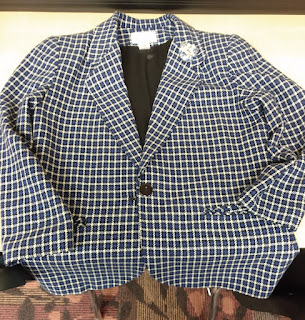
Just read the fabulous Fashionopolis (2/15/22) by Dana Thomas. Longtime readers know I love thrifting and rarely buy new clothes; this book made me feel very good about my choices, considering how wasteful the fashion industry is. 

Realized that I have had this jacket since at least 2006, since I remember wearing it to my older daughter's cross country meet. It's my school colors, so I probably wear it at least 8-10 times a year. It probably cost $2, and I've never had it dry cleaned. 

This gave me pause, but I always sponge and brush my clothes, and wear washable layers underneath jackets, skirts, and sweaters. A lint shaver helps keep things looking crisp. My rule of thumb is always "If I saw this at the thrift store, would I buy it?" I think this has held up pretty well. 

Ms. Yingling

Monday, January 03, 2022

MMGM- When Winter Robeson Came

It's
Marvelous Middle Grade Monday
 at 
and #IMWAYR day 
at 
and 


Happy New Year! I'm never great at celebrations, but am sending everyone virtual cake today. For the last ten years, since my post on 2 January 2012, I have posted at least one book review every single day. Over the last few years, I haven't posted reviews for every book I read because blog followers thought that was too many books to keep track of. 

It feels like there should be a party. (*Blows noisemaker*) Or, you know, recognition by the president. 

Woods, Brenda. When Winter Robeson Came
January 11th 2022 by Nancy Paulsen Books
E ARC provided by Edelweiss Plus

Eden's family has recently moved from the South to Los Angeles, and while she enjoys the better social conditions for Black people, she misses the slow pace of life in her old town. When her cousin Winter comes to visit in the late summer of 1965, she's glad to see him. The two plan some fun outings, but Winter also wants to find his father, who went missing a number of years ago. They have an address in Watts, and manage to meet some people who have some knowledge of others who might have more information. Since it's 1965, the two speak at length to the elderly Betty West, exchange phone numbers, and are able to follow up. Winter does have some luck trying to locate his father, J.T., but as the Watts Rebellion heats up, Eden and Winter are very close to the neighborhood where there is civil unrest. They are able to help, despite being told by Eden's working parents that they are to stay in the house, 
Strengths: The 1960s are such a rich yet unexplored time period in middle grade literature, and this was a great way to cover the topic. Other than English's 2017 It All Comes Down to This, I can't think of another book about the Watts Rebellion. Like English, Woods was young and living not far from Watts when this occurred, so has a passing knowledge and emotional connection to the events. Winter's experience trying to locate his father further reinforces the treatment of Blacks by society. White and Black flight from Eden's neighborhood is portrayed, and the Watts Towers are discussed briefly. Their appearance on the cover is fantastic. The best part of this, for me, was the small details of every day life, like the family's outfits when they dress up for a party, the food they eat at a beach picnic, and the freedom with which Eden and Winter roam their neighborhood and connect with people who might have known his father. 
Weaknesses: Eden is portrayed as having a significant interest in music, but this was somehow easy to forget, so when she would describe a situation in musical terms, it would surprise me. Since this is a novel in verse (and a short one at that), there was a lot of information that I would have liked to have seen included. It would also be great to see a short nonfiction book on the Watts Rebellion, but I haven't been able to locate one. 
What I really think: Definitely purchasing, and would love to see more fiction books covering Black history. I am still waiting for a book about busing in Cleveland in the 1970s.

Sunday, January 02, 2022

Animal Books for Young Readers

Barkley, Callie and Bishop, Tracy (illus.) 
Liz's Pie in the Sky (The Critter Club #23)
Published October 5th 2021 by Little Simon
Copy provided by Young Adult Books Central

Liz's family are going to the cabin at Marigold Lake for a fall festival, and she invites her friends Marion, Amy, and Ellie to come with her! Liz's mother is a veterinarian, and the girls once found and rehabilitated baby mice, so they are looking forward to investigating the wild life in the area. Liz also wants to bake a special pie, since Thanksgiving is coming soon, and wants to plan other activities as well. Unfortunately, things don't go as well as she would like. Her pies don't turn out to her satisfaction, but she takes a break to go on a picnic and walk with her friends, and they find a goose who is left behind. With Dr. Purvis' help, they nurse the goose back to help, and it turns out that berry pie without sugar is just right for a hungry bird. 

This has a great mix of black and white illustrations and large text, and the small size of the book is similar to Poppy Green's Sophie Mouse or Dillard's Mouse Scouts. The reading complexity is perfect for readers who have mastered I Can Read Books and are moving on to titles like The Magic Treehouse. Even though I hadn't read any other books in the lengthy series, it was easy to jump right into this story. I believe that the other books rotate through focusing on the other characters. The cast is slightly divere, with Ellie appearing to be Black. 

The story is charming, with the girls playing the alphabet game on the car ride, getting along together, and enjoying nature. The lake house setting is interesting, and the girls talk about a lot of experiences that some readers might not get to experience first hand, like picking apples, sweet potatoes, and pumpkins. Liz has a grown up with her in the kitchen while she is making the pie, and she is generally safe, although she does burn the filling. 

Readers who like books with a pleasant ensemble cast, like Meyerhoff's The Friendship Garden or with a concentration on food like Hiranandani's Phoebe Green series will enjoying spending a weekend with Liz and her friends, and might even be interested in embracing the lost art of pie making!

Webb, Holly. The Storm Leopard (Wintry Tales #4)
October 5th 2017 by Stripes Publishing 
Copy provided by Young Adult Books Central

Isabelle and her family visit the nearby zoo and see some snow leopards, which are a new animal to the zoologically inclined Isabelle. When the family visits the gift shop, Isabelle sees a small stugged snow leopard, which has a card on it that it is made by a family in the Himalayas. The animals are endangered, so the family works with a conservancy organization; in exchange for protecting the animals, they get a contract so that they can sell their crafts, thereby earning a livlihood without hurting the animals. When Isabelle goes to bed, she dreams that she has traveled to the Himalayas, where she meets Odval. Odval is crying because three of her family's goats have been killed, which will negatively impact the family. Odval thinks that Isabelle is her imaginary friend, Sarangerel, and Odval's family can't see Isabelle. Odval worries that her family thinks the snow leopards whom she has been observing are at fault for the goats' deaths, and even though they have a contract to make crafts, they might be inclined to kill the mother, whom Odval has named Grace. This would leave her two cubs to die. They two girls work on a way to save the animals. Isabelle soon returns to her home with a renewed sense of urgency in helping the snow leopards. 

Even though this is book four in the series, it was very easy to pick up the story. It was good to see that Isabelle had an interest in animals, and being able to "travel" to the Himalayas is a fascinating experience that many young readers will enjoy. The details of Odval's family's home, work, and general way of living seem well researched, and there are notes at the end of the book about snow leopards. 

Webb excels at tales with both animals and some magical realism, like Sam the Stolen Puppy and the Rose series, and this British author has a lot of books to choose from. I liked the component of helping the animals, which gave this a feel sort of like The Magic Treehouse meets Miles' The Puppy Place. 

Occasional page illustrations add to the charm, and the inclusion of a glossary for the some of the Mongolian terms was very helpful. Other titles in this wintery series include The Snow Bear and The Reindeer Girl and would make a lovely winter holiday gift, perhaps accompanied by a stuffed animal. 

Camerson, W. Bruce. Foxes in a Fix (Lily to the Rescue!, 7) 
September 28th 2021 by Starscape
Copy provided by Young Adult Books Central

Lily lives with her girl, Maggie Rose, whose mother runs an animal shelter.  Maggie Rose is constantly trying to get people she knows to adopt rescue dogs. When her father asks Mr. Martin, who has a plane, to fly to Alaska with some young snow fox pups that have been bred in Coloradoe, Maggie is sure that Mr. Martin needs a dog as well. She brings Lily along on the visit. Mr. Martin's own dog has just passed away, and he says that he is not ready for another one, but Maggie Rose hopes she can change his mind. Unfortunately, Lily causes all manner of trouble, ruining a model airplane, barking at squirrels, and even rolling in something dead and requiring a bath. When the zoo where the fox pups are being kept reports them missing, Maggie Rose hopes that Lily can be instrumental in finding them. When the group finally locates the pups and takes them to Alaska, they connect with breeders who have huskies. A pup there is missing a paw, so likely will have a hard life. Will Maggie Rose be able to convince Mr. Martin that this puppy is meant for him?

Told from Lily's point of view, this is an early chapter book has adorable pencil illustrations of a variety of dogs, including the effervescent but somewhat misguided Lily. Maggie does her best to control her, and has the best interest of animals in mind. Like Miles' The Puppy Place books, Cameron's books offer a lot of good information to potential dog owners. 

In addition to the excitement of the fox pups escaping, there is the adventure of going to Alaska and working with the sled dogs. Mr. Martin's back story, with information about the three legged dog he had as a child, added another level to the story, and his sadness over losing his pet may help young readers process a similar experience. 

Readers who aren't quite ready for Johnson's Dog Driven or Gary Paulsen's adventure books will find a lot to like in this series for younger readers. Even though I haven't read the first six books in the series, it was easy to pick up the storyline. I'm curious to investigate the other adventures that Maggie Rose has. 

Saturday, January 01, 2022

Saturday Morning Cartoons- Wonderful Women of the World


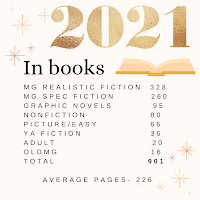
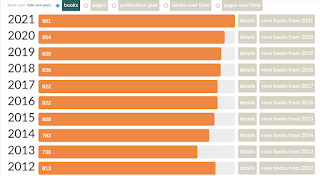
Happy New Year. Of course, the real new year starts the Tuesday after Labor Day, but I'll play along. The interwebs are awash with people posting best of lists, reading stats, and other... booky things that I just can't get interested in.  I'm also having a lot of trouble caring about Twitter. I would rather read books. Or blogs with book reviews. I can spend about ten minutes on Twitter before I get itchy and have to get off the computer. 

Here is as far as I have gotten with statistics:


Wonderful Women of the World.
 Laurie Halse Anderson (Author), Lilliam Rivera (Author), Kami Garcia (Author), Cecil Castellucci (Author), Cat Staggs (Artist), Carina Guevara (Artist), Robyn Smith (Artist), Igzell (Artist) 
September 28th 2021 by DC Comics 
Copy provided by Young Adult Books Central

In this comic style collective biography, a wide range of women and their accomplishments are highlighted. These range from the well known (Beyonce, Ruth Bader Ginsburg, Serena Williams, and Greta Thunberg) to the less well known (Keiko Agena, Mariana Costa Checa, Leiomy Maldonado). Not only are there a variety of careers and life paths portrayed, but a diverse range of cultural backgrounds and identities. It's nice to see that this diversity is also evident in the authors and illustrators. Many well known Young Adult authors are represented, such as Melissa Marr, Traci Sorrell, and Olugbemisola Rhuday-Perkovich. 

The stories vary in styles and approaches, but all highlight the activities of the woman being covered. There are many back stories, and good coverage of the influential work. For example, Judith Heumann's story covers her childhood and discusses how people with disabilities were treated, and how she worked to change this. The book is broken down into five categories, including Strength, Compassion, Justice, Truth, and Equality. 

This is very dense with information, and the print is very small in order to fit so much in and still include the detailed, richly colored illustrations. This is fine for high school readers, but middle grade ones who are drawn to the graphic novel format because it is easier to read might struggle with this. 

Wonderful Women of the World is an excellent resource to add to a biography collection that includes Vashti Harrison's Little Leaders, The Great Book of Badass Women: 15 Fearless and Inspirational Women that Changed History by Rachel Walsh, 50 Fearless Women Who Made American History: An American History Book for Kids by Jenifer Bazzit and Krull's First Ladies. 

Friday, December 31, 2021

Guy Friday- A Man Called Horse

Turner, Glennette Tilley. Man Called Horse: John Horse and the Black Seminole Underground Railroad 
Harry N. Abrams (September 21, 2021)
Copy provided by Young Adult Books Central

Born in Florida in 1812, John Horse's father was most likely a Seminole tribesman, and his mother an enslaved Black woman. This was a difficult time in history, especially in this part of the world, when troubles arose between Seminoles, free Blacks, the Spanish, and Florida planters. In 1835, the Second Seminole War began. Young John had language skills that let him travel between the several different communities, affording him opportunities but also occasionally getting him into trouble. Black Seminoles faced unique challenges, but by 1844, Horse was part of a delegation to Washington that tried to get better rights for Black Seminoles. He continued in his role as a statesman, fighting on several fronts for rights, and was instrumental in helping his people work towards freedom. 

 This is a well formatted and researched biography about a previously unheralded person. Just the right length for pleasure reading, but with enough information for research, it is well illustrated with drawings and photographs that add a layer of understanding to the text. The additional maps, timelines, and notes help provide a framework for understanding Horse and his times.

It is difficult to find biographies that accurately portray Native Americans; until twenty years ago, almost all of the books were written by non-Native people and were not accurate in the portrayals of the actions of the US government. This smaller format book (5.5 x 8 inches) is extremely attractive, with colorful page decorations, good sized text, and more illustrations than I would have thought would be available. The notes at the end about the Horse's legacy will be helpful to students doing research for National History Day, as will the bibliography at the end. I'm hoping that we will see a lot more biographies about a variety of unsung historical figures, and this is a great format for titles covering them.


Tate, Don. Pigskins to Paintbrushes: The Story of Football-Playing Artist Ernie Barnes
August 17th 2021 by Harry N. Abrams
Copy provided by Young Adult Books Central

In this picture book biography, we learn of Ernie Barnes, who was born in 1938 and raised in North Carolina. He was fond of drawing and painting, and preferred these inside pursuits to the rough and tumble of sports. When he got a bit older, he tired of being picked on for being somewhat overweight, and tried out for the football team. A teacher suggested that he start body building, which helped him to become a better football player. Although he continued with his artistic pursuits, he was offered a number of college scholarships for football, so traveled down that road for quite some time. After playing in college, he was recruited for the Colts, but cut at the end of the training period. He ended up playing five seasons in the NFL with the New York Titans, San Diego Chargers, and Denver Broncos. When he retired because of an injury, he approached a team about becoming their full time artist, and began to find acclaim from his work. His paintings appeared on the television show Good Times, and he made several guest appearances on the show as well. He passed away in 2009 after a long career in art.

Tate has a good note in the back that his own art work is not meant to represent the style of Barnes, and the bright colors and clean lines tell Barnes' story with a lot of interest. There is a lot of texture in the illustrations, and the treatment of fabric is especially nice. 

This is well researched, and there are footnotes at the end, as well as a timeline and brief bibliography. Tate, who is also Black, discusses in an end note how inspirational he found Barnes' work once he discovered him. 

Barnes' unique mix of football an art has been covered in Between the Lines: How Ernie Barnes Went from the Football Field to the Art Gallery by Sandra Neil Wallace and Bryan Collier, but this is a different enough book to warrant attention. Hand this to fans of Tavares's Growing Up Pedro, Reid and Freeman's Althea Gibson: The Story of Tennis' Fleet of Foot Girl and Kelly's Miracle Mud: Lena Blackburne and the Secret Mud that Changed Baseball.

Thursday, December 30, 2021

Time Heist: Cat Ninja #8

Cody, Matt and Thomas, Chad. Time Heist: Cat Ninja #8
October 12th 2021 by Andrews McMeel Publishing
Copy provided by the Publisher

Cat Ninja, and his sidekick Master Hamster, are back in another adventure. Their humans, Leon and Marcie, know all about their exploits. When Leon brings home an egg from school, the two are left to babysit it, even though Cat Ninja is plenty busy figuring out why OctoPunch has turned evil and is wreaking havoc on the community, and Master Hamster is even busier crafting flying food bowls so that he doesn't have to move from the couch in order to get a snack. It turns out that the owlet that hatches, whom they name Hoot, is the daughter of Chronowl, who has sent her through time to keep her safe. While Leon and Marcie have to deal with their parents' divorce and moving between two households, Cat Ninja needs to worry about a variety of super villains, Elan Mollusk, and threats from Cuckoo, which all seem to be tied into Hoot's fate. Will he be able to keep everyone safe, given that Master Hamster is a somewhat less than helpful sidekick?
Strengths: Cat Ninja and his humans have a charming relationship, and I found Leon and Marcie's activities with their mom rather interesting. They also want to keep Hoot, but their mother thinks he should be turned into a wildlife rescue, which added an interesting twist. Most young readers will be more interested in Cat Ninja and his highjinks with a variety of villains. The time travel component of this was a nice addition. These books are the closest thing I have seen to the comic books that I remember in the 1970s. When we were on vacation, my parents would let my brother and me get a comic or two at a gas station in Breezewood, PA, and we looked at our small collection for years. The chapters are episodic in the same way that I remember the ones in our Richie Rich comics being. A lot of fun for young readers.
Weaknesses: The paper and ink on these always gives me a headache. I should go sniff some of my older titles to see if this dissipates over time. 
What I really think: If I ran an elementary library, I would purchase this entire series. Prices range from $8.99 for a paperback to $16.89 for a prebind. Since the paper over board hardcover is $12.51, I'm not sure what the best format to purchase would be. My middle school students would certainly read these, but I don't have enough space to invest in too many series like this. Epic! has a number of good choices for these graphic novels. 
 Ms. Yingling

Wednesday, December 29, 2021

If you don't understand Cat Kid, you don't grok Pilkey

Pilkey, Dav. Cat Kid Comic Club
December 1st 2020 by Graphix
Copy provided by Young Adult Books Central

Li'l Petey (aka Cat Kid) has decided to run a drawing club for the tadpoles, offspring of the somewhat overly concerned Flippy. After the students opine that they don't have any ideas, can't draw, etc., their first assignment,is to write the stupidest comic ever and "fail" at writing. Of course, they come up with gems like graphic novels about "monster" cheese, a toothbrush who is a lawyer for dinosaurs, and other sketchily drawn, humorous stories. When they find that their classmates "failed at failing", a lot of creativity emerges. There are photo illustrated comic books of haiku, clay characters, felt collages, and lots of destruction, murder, and poop. Flippy isn't having it. He tells the group that they are inappropriate, and are no longer allowed to write about violent occurrences or use potty humor. Cat Kid, however, comes to their rescue and points out that Shakespeare uses all of those things, plus plenty of fart jokes, and many other adult writers do as well. Why can't kids' books have them? Flippy is still not pleased with ideas like Frankenfart vs. the Bionic Barf Bunnies from Diarrhea Land, and demands that the students produce work that is wholesome and uplifting. After a conversations with Nurse Lady, however, he tries to remain chill and let the students be creative without too many strictures. It's hard, but the group comes up with many clever and amusing ideas, not all of which involve poop. They learn that it's okay to learn by tracing drawings, that there are no set rules for the way books have to be, and that sometimes the best way to learn is to fail. 

Younger readers will find all of the fart jokes amusing, and definitely take away the message that it's okay to struggle with creativity. The thing I admired the most was Pilkey's determination to directly challenge teachers, librarians, and parents who have deemed HIS work inappropriate because of the violence and potty humor. If you aren't familiar with Pilkey's work, as well as with the challenges that it has faced, you might not understand the strong message. I'm not sure that younger students will quite understand, but middle grade readers will know enough about how adults feel about their reading materials that they will cheer on Cat Kid (and Pilkey's) message about creative freedom.

Aside from that, it was great fun to see the creative process of making a graphic novel explained and to see a variety of formats and storylines. I know that my students frequently have trouble coming up with ideas when they are assigned creative writing, and I loved Cat Kid's idea about writing down things that writers feel passionate about, and then making a story about a combination of those. The different formats are shown in a purposefully elementary style which was a fun change from Pilkey's normal style, and harks back to Harold and George's comics in Captain Underpants. I have to say that I did appreciate that the spelling was more uniformly standard in this book.

Pilkey has a loyal following even among 8th graders, so this book will need no recommendation from adult for kids to read it. If you have a young artist who wants some inspiration for their own work, you can't get an instructor any better than Cat Kid... and Dav Pilkey.
 Ms. Yingling