Tuesday, March 15, 2022

Asking for Trouble, Aviva and the Dybbuk

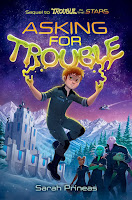
Prineas, Sarah. Asking for Trouble (Trouble #2)
March 15th 2022 by Viking Books for Young Readers
E ARC provided by Edelweiss Plus
After their adventure in Trouble in the Stars, Electra and Trouble are back on the Hindsight with Captain Astra. They have brought along the baby shapeshifter they rescued, who likes to assume the shape of a donut, so they call it that. When the Hindsight goes in search of the cargo ship the Skeleton, they are pursued by the StarLeague ship, Arrow, whose crew has been alerted to their actions due to Donut's shapeshifting. They find the cargo ship at the edge of the universe, but it's difficult to get the cargo off when the ship is wrapped in a blackdragon. They manage to complete their mission, but the Arrow is still stalking them. When Captain Astra tries to sell the supplies, the group meets Electra's mother, who tells them that her sister, Miracle, has also been taken by the StarLeague and forced into training as a cadet, just like Electra was. Electra goes back to the school to try to save her sister, but it's a little harder for Trouble to make it there. With the help of rats who get an identity chip for him (and program it with a fake identity!), he and Donut manage to make their way to the school. Trouble hopes to rescue some other children as well, since the academy procedures are very abusive. Trouble has embraced his human identity, shape shifting mainly when he is hungry and needs to scarf down a pillow, or when he needs to turn into the weapon form for which the Star League created him. He considers Captain Astra his mother, but will this change when he finds out even more secrets about his identity?
Strengths: It was interesting to see Trouble have to babysit another shapeshifter while he was still learning a bit about ontrolling his own powers and settling into his human form. Finding Electra's mother was fortuitous, and her desire to go back to the school and rescue her sister was understandable. The Hindsight's schedule is flexible enough for the two children to go on this mission while they are worried about what the appearance of blackdragons means for the StarLeague. There's plenty of action and adventure, and middle school readers who are always hungry will be sympathetic to Trouble's need to constantly eat! 
Weaknesses: This started with an overview of all of the crew of the Hindsight, who are a colorful bunch from a variety of backgrounds. I struggled to keep them all straight, and then they really didn't show up again in the book! N.B. I have never watched the first Star Wars movie beyond the cantina scene, so apparently my tolerance for a large number of alien life forms at once is pretty low!
What I really think: This is a great action oriented science fiction tale for readers who enjoyed Fry's Space Pirates, Lander's Blastaway, Emerson's Last Day on Mars and MacDougall's Mars Evacuees. There is always a need for more books like this for fans of Star Wars and Star Trek. It seems like there should be at least one more book. 

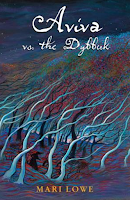
Lowe, Mari. Aviva vs. the Dybbuk
February 22nd 2022 by Levine Querido
ARC provided by the publisher

Aviva and her mother (Ema) live in a small apartment above the mikvah that is next door to their shul. Her mother, who was a teacher at Aviva's Orthodox Jewish school, took this position after an accident that claimed the life of Aviva's husband six years previously, and struggles with depression and borderline agoraphobia. Aviva helps her mother, but is very much impacted by her condition, and is further saddened by a recent break with her best friend, Kayla, although Kayla's mother is still very supportive. The other girls at school have sided with Kayla, and treat Aviva like an outcast. Also complicating Aviva's life is the fact that the mikvah is haunted by a dybbuk, a mischievous spirit of unknown origin who is unable to move on, and who frequently causes  minor destruction at the mikvah. As the Bas Mitzvah for most of Aviva's class approaches, the school plans a big party, but intends to have it be a mother-daughter event instead of a father-daughter event, in part because of Aviva's situation. After a tussle on the machanayim court (a game similar to dodgeball) between Aviva and Kayla that ends with another girl's nose being broken, the principal bans the two girls from trying out for the team, and assigns them the task of creating more excitement for the Bas Mitzvah Bash. The Orthodox community is also impacted by racial incidents, such as when newly poured cement outside the shul is inscribed with a swastika, and are on high alert. Kayla and Aviva work on the party, but the dybbuk is a constant presence and worry. Will the two be able to get past their differences in order to deal with the dybbuk, plan the Bash, and help Ema? And will secrets about Aviva's experiences dealing with her father's death finally come out?
Strengths: There are relatively few middle grade novels with Jewish main characters, and even fewer with Orthodox characters. Aviva's school, her mother's job with the mikvah, and details about dishes for kosher and nonkosher food were all interesting parts of the story, and I appreciated that the story was not about her preparing for her Bas  Mitzvah. The glossary of terms at the end was very helpful; I know we shouldn't need terms from other cultures to be defined, but since my students will most likely be unfamiliar with them, this is very helpful. The friend drama is always a good inclusion for middle grade stories, and the presence of the dybbuk adds interest as well. 
Weaknesses: The cover is not very appealing, and the text size in the ARC was very small. This shouldn't make a difference, but it does to my students. The way the dybbuk played out was interesting, but adding this seemingly fantasy element took away a little from the other storylines, although they were all woven together very cleverly.
What I really think: I'm always looking for books with cultural connections, and the Levine Querido imprint always brings out such intriguing choices. There are not as many titles with Jewish concerns as I would like to see. It's been a number of years since Perl's When Life Gives You OJ,  Ben Izzy's Dreidels on the Brain and Freedman My Basmati Bat Mitzvah. Aviva and the Dybbuk was somewhat similar to Panitch's The Trouble with Good Ideas (which involved a golem), but wasn't quite as appealing as Korman's Linked, which had a perfect balance of culture, school events, and humor. 

Ms. Yingling

Monday, March 14, 2022

MMGM- Falling Short, A Rose Named Peace

It's
Marvelous Middle Grade Monday
 at 
and #IMWAYR day 
at 
and 


Cisneros, Ernesto. Falling Short
March 15th 2022 by Quill Tree Books
E ARC provided by Edelweiss Plus

Marco and Isaac have been best friends for year, and as 6th grade approaches, they have big plans. Marco, who excels academically, hopes to play basketball in order to attract the attention of his father, who doesn't visit much and who doesn't think he is "manly" enough. Isaac struggles with his school work, and hopes to be better at remembering to turn in assignments, hoping that this will cause fewer fights among his parents, who are getting divorced. Isaac's father is an alcoholic who can't be relied on to take care of Isaac or to be sober when he has to pick him up. Middle school gets off to a decent start, and Marco finds some new friends in his able and talented classes, classes Isaac is not in. Isaac finds some friends on the basketball team, but they are not always kind to Marco, who tends to rock his dweebishness without apology. The only class the two have together is gym, which includes the stressful locker room experience. Byron, who is a good basketball player, is particularly unkind, which eventually causes the coach to bar him from playing. 
Strengths: There are SO many middle grade books with parents and siblings who die, but really, the biggest issues that actual middle grade readers face are ones like affect Marco and Isaac. Parents have issues that affect them, like alcoholism or divorce. It's tough to balance school work and extracurriculars. Friendships shift, friends pursue other interests, and groups of friends don't always get along. Physical changes make it hard to just... navigate the world. Yet, these problems rarely make it into the literature. I get it. They are subtle problems that are harder to depict that the obvious trauma of death and loss. Cisneros clearly understands what 6th graders experience, and does a good job at incorporating things that actually occur in middle school, rather than things people did in middle school 30 years ago, like school elections and newspapers. There are still locker rooms, though no showers. Lunch time and choosing where to sit is a HUGE issue. Staying up late to do homework and then being tired in the morning is a problem. Even transportation back and forth from school can be a subject of stress. The best part of the book is that, despite all of the different stressors the boys experience, they manage to stay friends. That's a great message, and one that is very reassuring to readers. 
Weaknesses: Was this intramural basketball? I didn't think about it too closely. Basketball doesn't start at the beginning of the school year in Ohio, and 6th graders can't participate in school sports. I was also confused by the fact that Byron was able to go to another school and get on their team so quickly. Maybe things are different where Cisneros teaches, and I was willing to ignore this because I liked the story so much. 
What I really think: Definitely purchasing, although I sort of wish there had been a basketball on the cover and that the boys had been in 8th grade, so that older readers would find it more appealing. The height differences become even more pronounced by this age, and it would make more sense for them to be playing on a team. This is the sort of book I'll buy multiple copies of, and they will never make it back to the shelf because students will recommend the book to each other. Another great book from the author of Efren Divided

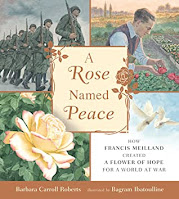
Roberts, Barbara Carroll and Ibatoulline, Bagram (illustrator).
A Rose Named Peace : How Francis Meilland Created a Flower of Hope for a World at War
April 12th 2022 by Candlewick Press
E ARC provided by Edelweiss Plus

In the early 1900s, Francis Meilland's family grew roses in the French countryside, and as a young boy, he was interested in how the different varieties were created. He had some ideas of his own, and spent years cross pollinating in order to grow a rose of his own. This took a lot of work, but eventually he came up with a rose that was a creamy yellow with red tipped petals. He managed to make contacts in different parts of the world and was selling his flowers to them. When war broke out in Europe, he was able to send many of his contacts cuttings of this new rose. Since he had to turn the family farm over to food production for a number of years, and the war cut off contact with the outside world, he had no idea what happened to the rose. Robert Pyle, a breeder in the US, filed a patent in Meilland's name even though he did not know his friend's fate. Meilland kept up a small plot of roses during the war, and when peace was finally declared, the rose caught on, and was given the name "Peace". It is now one of the most popular rose varieties in the world. 
Strengths: This is a beautiful and informative picture book. Ibatoulline's illustrations are beautiful, especially the views of the French countryside and the roses. There is just enough explanation of how roses are propagated to make sense even to very young readers without being overwhelming, and enough about the war to show how terrible it was without being traumatizing. Both topics require a delicate balance in a picture book treatment, and this was well done. The best part about this is that there is just the right amount of text for a read aloud, but plenty of information, and the pictures have plenty of details for pointing things out and discussing. It's been a while since I have read a picture book with a young person, but I remember those things being critical for read aloud success!
Weaknesses: There is no mention of Francis' mother, after whom the rose was originally named and who died at a young age. Meilland died at a young age as well. I would have rather had a few more biographical facts about Meilland, and some of the pages depicting his various failures could have been replaced with some of that information. 
What I really think: This is a fantastic book that touches on many curricular issues, including science, botany, and World War II, and is also a story of hope and resilience. Since I love tea roses, I am half tempted to find a bush to plant in my yard now. As I write this, the war in Ukraine is entering its second week, so this is especially timely. Have we learned nothing as a civilization?

Sunday, March 13, 2022

The Best Liars in Riverview

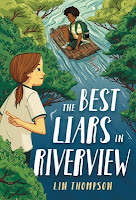
Thomspon, Lin. The Best Liars in Riverview
March 8th 2022 by Little, Brown Books for Young Readers

It's been Joel and Aubrey's tradition to have a camp out on the last day of school, so they have one on the last day of 6th grade, even though the day was a difficult one. When Joel goes missing from his home in Riverview, Kentucky, Aubrey's story is that they decided not to sleep out, and they both went home, but she has a lot more information that she's not sharing with anyone. Joel was teased at school, which was an ongoing issue, but it was the comment by an office worker about "what does a kid like him expect?" that hurt even worse than the horrible slur aimed at him for being gay. Aubrey doesn't tell anyone about the raft that the two have been building, and when she finds that it is missing, she has a good idea of where he has gone. Her older sister is supposed to be watching her, as the town is searching for her friend, but she takes off with her friend, Mari, who knows what it is like to be considered different in their small and conservative town, since she has struggled since moving from a larger city with her two mothers. Aubrey also isn't very comfortable in her own skin, and is coming to terms with the fact that she doesn't exactly feel like a girl. She and Joel have skirted around these uncomfortable topics, but have never really discussed the implications of the differences that they are feeling. Will Aubrey and Mari be able to find Joel, and will the two friends be able to process their new realities with the help of their families and friends? 
Strengths: Aubrey and Joel have a very supportive friendship that has allowed them to live in an environment that is not overly tolerant to differences. It's good to see that Aubrey also has a good friend in Mari, and that her sister and parents are generally supportive as well. The Kentucky small town setting is well described, and the people are not depicted as inherently evil; everyone is very concerned for Joel's safety, even though some people at school have given him a hard time. The outdoor adventure aspect adds an element of suspense and excitement to theis tale of identity.  
Weaknesses: In an ideal world, LGBTQIA+ stories wouldn't be so fraught with problems, but that's not everyone's reality. This shouldn't be the only type of story for middle grade readers representing gay or transgender children, but it is a good choice to show the more problematic side of these identifications.
What I really think: A good addition to middle grade collections with LGBTQIA+ representation along with books like Pancholy's The Best at It, Barakiva's One Man Guy, Dee's Star Crossed, and Gephart's Lily and Dunkin and others. 
Ms. Yingling

Saturday, March 12, 2022

Where the Sky Lives

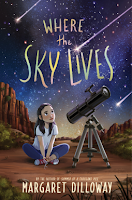
Dilloway, Margaret. Where the Sky Lives
March 8th 2022 by Balzer & Bray/Harperteen
E ARC provided by Edelweiss Plus

Tuesday lives in staff housing near Zion National Park, where her single mother, Dana, works as an archaeologist. Tuesday's best friend, Carter, lives nearby, since his stepfather, Grant, is a law enforcement park ranger. Tuesday loves her life at the park, but misses her uncle Ezra, who has recently passed away. Her mother is also struggling with this loss, and also is worried about her job. Funding is always difficult, and she's been furloughed several times, which has lead her to investigate jobs at universities. There are big changes to the park as well; a local farm, Hedges Ranch, has been sold to a developer who is going to build high density housing. While the environmental impact, especially on the night sky, is going to be devastating, there's no stopping the developers. This doesn't mean that Tuesday and Carter don't try. Tuesday gets a wooden box camera that a resident hipster artist has thrown away in a huff, and starts to take pictures. She talks Dana into letting her have an Instagram account, and tries to rally support for saving Hedges from development. Rich and famous influencer, Lyla, is visiting the park and gets interested in Tuesday's project, so has her tons of followers interested in it as well. Tuesday is sure that a note her uncle Ezra wrote from the hospital might hold the key to saving the park, and works to investigate what the note might mean. Dana is still concerned about her job prospects, so has applied for a job at South Dakota State University. Will Tuesday be able to save the park by solving her uncle's riddles before she and her mother leave?
Strengths: The description of the national park, and Tuesdays rambles across it in her attempts to save it from development are the best part of this novel. Of course, it made me want to go visit Utah, but also made me want to stay home in order to protect the fragile environment of the park. The small community was an interesting one, and Carter and his family, the artist, and the graduate students working on various projects all added an interesting dimension to the book. Young readers who are fans of Instagram will be enthralled with young Lyla's influence, fame, and wealth, and be glad that she is trying to protect the area. People traveling to beautiful natural places to take photos to post on social media is a big thing, apparently, and it doesn't always end well. Dana's struggles with employment are very realistic, and she's very lucky to get a university job! 
Weaknesses: Emotionally, this book is more on the lyrical, contemplative side. I wish it had been more upbeat and adventurous. There was a lot of suspense about the uncle's death that really didn't go anywhere. The mother's grief caused her to not take care of Tuesday as much as Tuesday needed her to. 
What I really think: This cover reminds me a bit of Swinarski's What Happens Next, another quiet story with a very particular place for its setting, and the national park setting reminded me a bit of Bowling's The Canyon's Edge. Fans of King's The Year We Fell from Space or Haydu's One Jar of Magic will be intrigued by the mystery as Tuesday struggles with coping with her uncle's death.
 
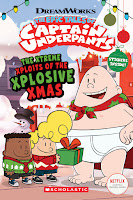
Rusu, Meredith. The Xtreme Xploits of the Xplosive Xmas (The Epic Tales of Captain Underpants TV) 
September 7th 2021 by Scholastic Inc.
Copy provided by Young Adult Books Central

George and Harold LOVE Christmas, even if their sweaters are itchy, they have to listen to boring stories over and over, and their friend Melvin is obsessed with Ham Nog. They write a comic book about Mega Blissmas that includes lasers and robots, but are told this is unrealistic and that the way to make Christmas better is to help other people. This doesn't make the boring school pageant any less painful, and they highjack the storyline, angering Principal Krupp. Instead of scrubbing toilets, they decide to use Melvin's Time Toad 2000 to go back and change Christmas. They meet with Santa and pitch some of their ideas. When they return to the present, they find that Blissmas is now a thing, but is it an improvement on the traditional holiday celebrations?

Jacked Santa and battling Christmas robots will insure that this graphic novel adaptation of the Netflix series based on Dav Pilkey's Captain Underpants series will be a hit with young children. It's a little closer to the original story than Ball's Clifford the Big Red Dog: The Movie  graphic novel, and George and Harold remain true to their artistic ways. I don't remember the character of Melvin from the books, but he does appear. He has a much larger role in this book, and Captain Underpants (aka Principal Krupp) has a nice turn, wrapped in aluminum foil. 

There's plenty of goofy fun, both in real life and in the boys' comics, and enough adventure to keep the pages turning even without Flip-o-Rama. There's also a decent message about the inherent value of Christmas and its traditions; I wonder if Netflix has to adhere to the old criteria for children's programming that they have to include some educational content? I lost track of the requirements for children's programming after reading a lot of books on the subject in the early 2000s!

The colors are very vibrant, and apparently align with the slightly reimaged style of the television show. The boys' Christmas sweaters are a nice touch, as if Captain Underpants' holly printed cape. The glossy pages probably include some screen shot type art from the program; I haven't seen the Netflix series, but this is fairly standard practice with book versions of shows. 

When my children were young, I didn't allow them to watch much television. In order for them to keep current on movies and other screen activity, I would allow them to read BOOKS about Disney movies and magazines about video games. That way, they could talk to friends about media, but not have to spend time on it themselves. This graphic novel adaptation of the Captain Underpants show would be a great way to appease children who want more installments about their favorite literary character but don't have a subscription to Netflix!
Ms. Yingling

Friday, March 11, 2022

Guy Friday- Honestly Elliott

McDunn, Gillian. Honestly Elliott
March 1st 2022 by Bloomsbury Children's Books
E ARC provided by Edelweiss Plus

Elliott divides his time between his mom's, where he feels at home, and his dad's house, where everything is new and shiny. His dad always seems disappointed in anything that Elliott does, whether almost failing a quarter because he didn't do any of the work, being interested in cooking, and having a major $600-in-damages "Incident" that is never discussed but that will take the money he is saving for a cooking summer camp. (Won't spoil it, but it wasn't anything awful and/or criminal.)The homework wasn't done in part because Elliott is struggling with ADHD. He's learning to keep checklists and better tabs on things, so when he is assigned a project, "Avery Local", to start a business, he hopes to do better. His friends, however, don't want to work with him because he is less than reliable, so he ends up working with Maribel, whose friends make fun of her need for gluten-free products because of her celiac disease. Elliott is a big fan of a cooking show, and he and Maribel decide on a cooking project. However, the next day she comes with the completed paperwork (which Elliott had planned to do during Advisory), which outlines a baking project. His idol dismisses baking as "not real cooking", so he's not happy. His idol also doesn't use recipes, so when the two try their first pies, they do not go well and waste a whole batch of expensive strawberries. While looking for a cheaper to produce alternative, they happen upon vintage community cookbooks and find a recipe for a vinegar based "Desperation Pie" that turns out well with a gluten-free crust. While school is going a bit better, Elliott is very worried, for many reasons, about his step-mother's pregnancy, and about having a baby brother. Will he be able to find a balance in his interests, and find a way to feel more at home with his father?
Strengths: This has a lot of interesting facets. Pets, divorced parents, a school project, and community involvement. Elliott is a well-meaning but complicated character who would be right at home at Big Nate's lunch table. I loved the details of how he felt at both of his homes, and about how he struggled with school work and organizing his life. There's a great scene where he is out of socks because he failed to do laundry! There was just enough about the stepmother's pregnancy and Elliott's worries about the new baby to make this engaging without taking over the other aspects of the story. The cooking will appeal to readers; middle schoolers are always interested in food. This was well-paced, a good length, and a fun respite from darker problems. Smaller problems are less traumatic to read about, and affect more students more deeply than authors seem to realize. 
Weaknesses: I would have liked to see Elliott's ADHD coping skills outlined a bit more, like Gerber's Focused. He is shown being in therapy, which is fine, but more details would have been nice. Also would have been helpful if he were on medication, and that was described, since there are many, many students in that situation, many of whom don't want to take that medication. 
What I really think: I liked this and need more humorous books, so will purchase, but we need to expand the kinds of activities that kids do in #MGLit! We've already had a number with school elections, newspapers, and dances, and cooking as well. More babysitting, perhaps? Or are tweens no longer doing that?
 Ms. Yingling

Thursday, March 10, 2022

We Are Wolves

Nannestad, Kristina. We Are Wolves
March 8th 2022 by Atheneum/Caitlyn Dlouhy Books
E ARC provided by Edelweiss Plus

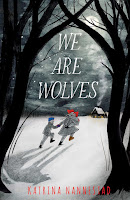
Near the end of World War II, the Wolf family in East Prussia is devastated that their father has to report to the front as a soldier for the German army. When news comes at Christmas that he is missing in action, they can hardly believe it. As things worsen in their area, there is some talk of preparing to flee, but the mother doesn't make plan. Mia is an infant, Otto is about 8, and Liesl is 11. When soldiers knock on their door and tell them they must leave, things are thrown into suitcases and the family joins the exodous out of town. The mother makes Liesl promise to keep her brother and sister safe, and to remember their true identities, no matter what. This is helpful when they are separated early on from their mother, and they follow their grandfather's advice to head to Vistula Lagoon and try to get a ship to safety in Denmark. At first, the children manage to fall in with some Russian soldiers, some of whom seem actually nice. They explain that the Germans had good lives, while Russians lived lives of deprivation. Liesl is fine with being helped by the enemy until one of the leaders wants to take Mia back to his own wife, who lost a child. The children run away, and take up with some other children. One of these children, Charlotte, is a spoiled child who doesn't grasp the seriousness of their situation, and at one point trades their cow for a new dress! Making their way across the countryside, the children face terrible cold and hunger, and make do with the few resources they have. The meet with more kindness than one would imagine, and eventually come to the home of Lithuanians Magdalena and Dovydas, when Mia is very starved and sick. The couple has had their share of losses during the way, and are happy to help out the children and have them become family. For their own safety, the children are given Lithuanian names and told to never speak German. While Liesl is glad to be warm, safe, and fed, she is worried that Mia in particular will forget her past. As the war winds down, will the children receive any word about their family?
Strengths: It's always interesting to see glimpses of middle class German life before the war; not everyone supported Hitler. This didn't linger on the time before the war, and got straight to the harrowing experiences of leaving home and trying to get out of East Prussia. The details of joining up with Russians and other children, of asking for help, and of having so few resources will appeal to readers who have an interest in World War II survival stories. I appreciated the inclusion of Lithuania-- there are still a lot of tales involving the Baltic States that could be told. The horrible experiences were balanced by the kindness of strangers, and the book ends as happily as this sort of story can. 
Weaknesses: The ending seemed a bit improbable, but I'm sure that there are many true stories where people were able to reconnect despite overwhelming odds as well. 
What I really think: Even though our 8th grade will probably drop their Holocaust unit, there is still an interest in stories like Harbour's Flight and the work of Marsha Skrypuch, so I will buy this book and turn a critical eye to some of my older, less appealing WWII books to be weeded. 

Wednesday, March 09, 2022

New From Here

Yang, Kelly. New From Here
March 1st 2022 by Simon Schuster Books for Young Readers
E ARC provided by Edelweiss Plus

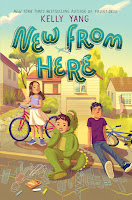
Knox and his family live in Hong Kong, where their Chinese born mother, Julie, is a highly successful banker, and their US born father is in business. He gets along with older brother Bowen and younger sister Lea in typical sibling ways. When the Corona Virus is detected in China, the parents decide that while the father will stay home because he has to work, the mother will take the children to California, where the family maintains the father's childhood home. Since his father is his greatest ally when he frequently messes up, Knox is devastated. Getting to California while taking hand sanitizing and masking precautions is tough, and settling into their home is difficult. Working and schooling remotely with Hong Kong institutions proves too much for the mother, who loses her job, and for the kids, who don't like online schooling. They are enrolled in the local school in February 2020, and Knox does like his teacher, and makes a friend with another Asian-American boy, Christopher, whose parents own a local restaurant. The mother, used to the father's housework contributions, struggles with cooking and laundry, and Know and Bowen have to share a room. Bowen finds middle school difficult when the Coronovirus spreads and racial tensions increase, especially since he looks more like his mother than his father. Knox is obsessed with trying to get his father to visit the US, so embarks on several money making ventures, like selling his mother's carefully collected heirlooms at a garage sale and later helping Christopher's restaurant do deliveries. His income, however, is offset by the trouble he gets into, like knocking over a pop display at a supermarket with a motorized cart, and he learns that his impulsivity and poor choices might be reflecting the ADHD diagnosis his parents have hidden from him. COVID hits the US, tensions increase, schools go remote, and then it gets worse; Knox is ill with COVID. Will Knox and his family be able to reunite and survive the international pandemic together?
Strengths: There have been very few international families in middle grade literature who are not refugees, (aside from Kamata's Pop Flies, Robo-Pets, and Other Disasters  Levine's The Thing I'm Most Afraid Of, and Mendez's a Wish Upon a Stray, I can't think of any) so this was a fascinating look at a family who had roots in two countries. I loved all the details about the siblings getting along, about the mother struggling to get everything done on her own, and about the difficulties of settling in to a new school. Future readers will be enthralled by all of the COVID related precautions, and we can only hope that in ten years they will be shocked at the treatment of Asian-Americans. Knox's ADHD was interesting, and I could see a second book focusing more on his story, covering how he handles school and soccer when the world is not in pandemic mode. An interesting treatment of a particular point in history that has me wondering: will future generations need an entire book about a child fighting a bad case of COVID, the way we have a handful of books about chidlren in the 1950s with polio? Or, sadly, about a child who loses both parents to the disease?
Weaknesses: This was a slightly longer than usual middle grade book (368 pages), which will deter some of my struggling readers. There were a lot of threads that could have been trimmed in order to make this a tighter, more focused story. This isn't a surprise, considering the turn around time on publishing novels, but I wish the book had felt less rushed and more focused, since it has such good messages. 
What I really think: Definitely purchasing for historical purposes, but Walters' Don't Stand So Close to Me  has had slightly lower than normal circulation for a new book. Yang's Front Desk series has been super popular in my library, and is a Battle of the Books selection as well as a lit circle choice in the 6th grade, so will be picked up on that strength. Perhaps it's just too soon for children to want to read about the start of the pandemic, while we are still struggling with it?

Yang, Kelly. Yes We Will: Asian Americans Who Shaped This Country 
May 3rd 2022 by Dial Books
E ARC provided by Edelweiss Plus

If you're a big fan of Ms. Yang's, keep her upcoming collective biography picture book on your radar as well! I have to admit that I was expecting something more along the lines of the Wallace's First Generation: 36 Trailblazing Immigrants and Refugees Who Make America Great, and was a little disappointed that I couldn't buy a copy to cut up for bulletin boards. This is more of an overview; to accompany a poem about the impact of Asian Americans on the country, there are fantastic illustrations of various people by a wide variety of Asian American artists. The names of the people are included on the picture, and there are great notes in the back with further information. Great for classroom read aloud or as a springboard for research! 

Tuesday, March 08, 2022

The Greatest Story Ever Played

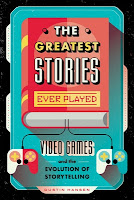
Hansen, Dustin. The Greatest Story Ever Played: Video Games and the Evolution of Storytelling
March 8th 2022 by Feiwel Friends
E ARC provided by Netgalley
 
I am quite possibly the least qualified person to review this book, even though I enjoyed this author's Game On! tremendously. While I was able to appreciate a history of games, with brief descriptions of the games and the impact on popular culture, I struggled a bit with this since I have very littel experience with video games. In short, I have only had all of my dinosaurs die in Dino Park Tycoon, had my city burn down repeatedly in SimCity even when the first thing I built was a fire station, and been stuck with a pig swimming around a rock lined pond in Minecraft. This has made me equate video games with frustration and boredom. I wasn't even aware that games had stories. 

Do they ever. Not Minecraft, per se, because that's a game that is just action. Hansen's description of games that are only action and those that have more cerebral components was helpful. What I struggled with was the deep dives into the construction and meaning of plots of video games of which I had never heard. Which would be just about all of them. It was sort of like trying to follow a critical analysis of, say, soap opera plots. I can appreciate the background that Hansen brings to the book, the breakdowns of quality of storylines based on well established criteria and the emotional impact they have on him personally, and his links between the stories in video games and the process of creating stories in general, but I couldn't fully understand what was going on. 

Language arts teachers who try to get their students to come up with story ideas could use this book to good effect. There are sections that would go right along with the curricular standards. Major camps of narrative styles! Personification! Juxtaposition! The plusses and minuses of storytelling mediums. It's all here, and set against the background of video games like Grim Fandango. The part that I really could appreciate was the fact that the games that were highlighted were briefly explained, with the year of introduction noted, and suggestions for where the games might be played today. Most of the games premiered before 2017, and Hansen notes that there is no way to keep up with the constant barrage of new games. 

For avid game players who themselves would be interested in writing, this would be the perfect book. I have just the student in mind, which means that I am completely justified in purchasing this title for my library! I just pitched it to a language arts teacher who walked into the library as well. This a great choice for game connoisseurs who want a critical overview of the intricacies of storytelling in video game construction. Hansen is a master at turning his knowledge and enthusiasm into informational books that I can enjoy even when I don't understand them.

Ms. Yingling

Monday, March 07, 2022

MMGM- The Race of the Century and Hearts and Crafts

It's
Marvelous Middle Grade Monday
 at 
and #IMWAYR day 
at 
and 
Bascomb, Neal. The Race of the Century: The Battle to Break the Four-Minute Mile
March 1st 2022 by Scholastic Focus
ARC provided by Young Adult Books Central

I'd like to think that all of my students knew who Roger Bannister was, and that he was the first person to break the four  minute mile, but since even I did not realize that the latest record for the fastest mile was set by Hicham El Guerrouj of Morocco in 1999, I think that is probably not true. The thing that I liked best about this book detailing the efforts expent to break this record in the 1950s is that it also talked about the two strongest also-rans, U.S. runner Wes Santee and Australian John Landy. They were both so close, and deserve to be remembered as well. 

In addition to telling the story of the three men in close competition for this record, this book gave a good overview of the views of running and exercise over time. The thought that the body had only a certain amount of heart beats, and once you used them up, you would die, seems ludicrous today. Considering that marathon runners in the early twentieth century ingested strychnine to help with endurance (see McCarthy's alarming The Wildest Race Ever, 2016), this seems reasonable in comparison. In order to understand the triumph of the four minute mile, it's important to understand the composition of the tracks, the running gear, and the science (or lack thereof) that went into training seventy years ago. 

It's also eye opening to read about the individuals who were training. Roger Bannister loved running, but didn't really consult too many others on how he should go about it. He was in school to be a doctor, and ran experiments on oxygen use in the body while he was preparing for his races, but he was also in school full time and covering shifts in the hospital! Santee had a hard upbringing, and was in college as well. He also joined the reserves, and ended up not running in several critical races because of that commitment. Landy was studying at the University of Melbourne, and trying to decide whether to concentrate on farming or teaching. Keeping connected to the running world was not as easy when technology consisted of radio and telephones! The fact that these men had to train in addition to going about their own lives and preparing for adulthood makes their efforts all the more impressive. No teams of trainers or schedule entirely devoted to their pursuits for them!

This book was very engaging and fast paced, and I kept turning the pages, closely following the progress that was being made. Perhaps the most impressive thing about the training was how few injuries there were, which made Landy's cut foot before the Empire Games seem all the more tragic. Certainly, middle distance racing in the 1950s involved a certain amount of privilege, and few runners of color are mentioned, but this is still a riveting read about events in the past that we can't change.

There are not as many books about running as there are about baseball, football or basketball, with the noteable exception of Speno's The Great American Foot Race:Ballyhoo for the Bunion Derby!(2017), Swaby's  Mighty Moe: The True Story of a Thirteen-Year-Old Women's Running Revolutionary (2019) and Babe, and the Wallace's Babe Conquers the World (2014), and Knight's Shoe Dog (2017), so this is an excellent title for young runners who want to know what the world was like before Lycra and Spandex, targeted diets, and prescribed training regimens. 

Papademetriou, Lisa. Squad Goals (Hearts and Crafts #1)
March 1st 2022 by Scholastic Press
E ARC provided by Edelweiss Plus

Mackenzie and her mother have moved into a new duplex, where they have a little more room for her mother's quilting hobby. (Or, as Mackenzie points out, her mother's fabric buying hobby!) The first day there, Mackenzie tries to heat up dinner, but hits the "auto clean" button on the stove and incinerates it. New neighbor Zane helps out, and Mackenzie tries to fix him up with her mother... and tries to draw the interest of the firemen as well! Her father lives far away with his new wife and son, and Mackenzie wants her mother to have someone in her life as well. At school, things are a bit fraught with former friends Avril and Johanna, and when Avril decides she doesn't want to talk to Mackenzie, she loses Johanna as well. Undaunted, Mackenzie revs up her projects, which include a fundraiser to raised money for new band instruments. She manages to get things started, but doesn't have as many skills as she needs to really get things rolling. She finally has to ask new friend Sheera (who is Zane's neice) for help, and manages to pull off a successful event. 
Strengths: Like Tara Dairman's All Four Stars, this starts with a small kitchen fire. Great lesson in safety, AND a great way to draw readers into the story. The description of Mackenzie's home, the way she and her mom get along, and how this affects her attitude and performance at school was just wonderful. I don't understand the need to kill off middle grade parents in order to allow characters to have adventures-- get the parents involved just a tiny bit! Tweens still basically like their parents, but are just starting to have problems dealing with them, and there's a lot of dramatic tension possibilities! The friend drama is perfect, and I loved that Mackenzie is able to make some new friends without too many problems. Her fundraiser draws from reality (are their arts programs that AREN'T underfunded?), and I loved her can-do attitude. The cover is great, and if this is a four book series I will be very happy!
Weaknesses: The E ARC kept freezing, which was very frustrating and lead to a poorer than usual grasp of details and names. 
What I really think: Has it really been ten years since Confectionately Yours? Right now, this is exactly the kind of book that students are asking for. I would LOVE to see a similar series with boys as the main characters. Kids in chess club? Robotics club? There are so many possibilities! 

Sunday, March 06, 2022

In Honor of Broken Things

Acampora, Paul. In Honor of Broken Things
March 8th 2022 by Dial Books 
E ARC provided by Edelweiss Plus

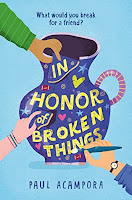
In the West Beacon suburb of Philadelphia, we meet three disaparate students at the combined junior/senior high, all of whom have their own problems. Oscar's younger sister Carmen has just died after a long bout with cancer, and he's having trouble going back to school. He's a good football player, and the school has lost a couple of games in his absence, so the principal is hoping he will return to the field soon. Noah is just starting at the school after years of being homeschooled, in the wake of his father moving out. He is much smaller than Oscar, but excels in all of his academics. Riley is also new to the school, having left inner city Philadelphia after her mother, a waitress, was held up at gunpoint at work. The two have moved to be near Riley's uncle, who is the priest at the local Catholic church that Oscar and Noah attend. The three meet in an art class, where they are working with clay. Noah's parents are both potters and ran a business out of their garage, which is struggling since his mother is not dealing well with the breakup of her marriage. Oscar has a surprisingly deft hand, and Riley struggles with the most basic details, but they all try hard to come up with a project for a school showcase. They also find support from each other at a time when they desperately need it, and their paths cross in odd ways. Riley's mother, while fighting with Riley, manages to hit Oscar with her car in the parking lot of school. Oscar has run out of class, where they were making Day of the Dead decorations, and he just couldn't handle it. Noah blames himself for the accident, since he was yelling at Oscar. Oscar isn't badly hurt, but cannot play football for a while, and it is eventually discovered that a more lasting injury to his hip that will keep him from playing was caused by the sport itself. Since football was Oscar's ticket to college and away from the pretzel factory where his parents work, he has to recalibrate his dreams. Luckily, he has new friends to help him. 
Strengths: West Beacon is so well described that I felt like I was right there! I loved the school, and especially the church and Riley's uncle. I don't know how many students spend time in church these days, but I spent a LOT of time at church in middle school. Bonus points that the characters were all at the older end of middle grade. There was just enough input from the adults in the book, from the understanding school secretary and art teacher to the four struggling parents of the children. The creation of art and the theory behind it is something we don't see often in middle grade books and was a good inclusion, and having football in any book is a plus. Oscar's grief over his sister is well portrayed-- it's very fresh, and he's struggling, but he is trying to continue on with his life while trying to keep memories of Carmen alive. 
Weaknesses: There are two sides to the argument about characters with trauma-- one is that students who are experiencing trauma themselves will be glad to see these experiences, and the other side is that students experiencing trauma might need a more pleasant break from reality. This is important, since so many people right now are feeling the effects of trauma. I tend toward the side of a pleasant break, but I know that I am in the minority with this view. 
What I really think: One of my recent favorites was Acampora's Danny Constantino's First Date, and my students ask more for upbeat books like that one. Confusion is Nothing New, How to Avoid Extinction, and Rachel Spinelli Punched Me in the Face are all titles every middle school library should have. This is a bit more along the lines of I Kill the Mockingbird, which teachers and librarians adore, but I wasn't as keen on. Part of my lukewarm feeling about this might be because on the day I read it, Oscar's deceased sister joined four deceased parents (one whose death was graphically depicted) and two other siblings who had passed away in the books I read. It was a lot for one Sunday! 

Saturday, March 05, 2022

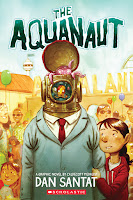
The Aquanaut

Santat, Dan. The Aquanaut
March 1st 2022 by Graphix
E ARC provided by Edelweiss Plus

Sophia's father and uncle were both scientists who studied sea creatures. When their ship went down in a storm, her father, Michel, drowned after being caught in one of the rooms. Her uncle Paul was unable to save him, and was dragged off the boat by coworkers. Several of the sea creatures in the lab band together, inhabit an old fashioned diving suit, and eventually make their way to San Diego. Paul runs Aqualand, a marine amusement park which has become more amusement and less marine thanks to a Snidely Whiplash style investor who insists on bringing in orcas and other questionable exhibits. Sophia is, of course, surprised that these creatures can not only navigate the suit, but can communicate with her a bit. She tries to hide them at first, but they eventually get out. Her uncle forbids them from leaving his lab at Aqualand, but when they discover the orca, they feel a need to steal a truck, hoist out the poor imprisoned animal, and release him into the sea. This doesn't make the investor happy, and he blames Paul. Paul, still feeling guilty about Michel's death, is trying to save Aqualand, but doesn't have enough time for Sophia. The Aquanaut is living on borrowed time. How will Sophia be able to save the creatures who have become like family to her?
Strengths: When there is an old fashioned diving suit piloted by sea creatures, is there any better format than a graphic novel? The expressions on the creatures' faces under the helmet are just priceless, and I love the fact that the suit often has a knit hat like Jacques Cousteau's crew! The Aqualand setting is really interesting, especially since so many of these parks have come underscrutiny for their treatment of animals. Sophia's relationship with her uncle in the wake of her father is troubled, and exploring this by creating a chosen family for her out of creatures who knew her father is certainly innovative. The real draw here, on top of the well developed story, are the gorgeous illustrations. With his picture book background, Santat knows how to pack a page with all manner of interesting things to look at; some graphic novels have half-drawn characters or settings in the background, but that is not the case here! There are so many good things about this fun graphic novel. 
Weaknesses: I understand that middle grade parents are often written into books only so they can be killed off, but Michel's death is about the only parent death I can think has been so painfully and graphically depicted. I would be aware of this in an elementary library. 
What I really think: Santat's work shows so clearly why a graphic novel that is conceived and written as a graphic novel is usually so much better than a novel adaptation. Santat's illustrations are wonderful, and he is able to tell parts of the story through the illustrations in a way that illustrators translating words to pictures don't always capture. This is especially true of the emotional impact that is shown in the faces of the characters. This was a bit goofy, so kids will enjoy it (my copy of Sidekicks is quickly devolving into a pile of dust after ten years), but there is also a great story behind it. 
 
Weir, Ivy Nicole. Anne of West Philly
March 1st 2022 by Little, Brown Books for Young Readers
Public library copy

After a lot of experience fostering boys in their West Philadelphia home, siblings Matthew and Marilla Cuthbert decide to foster a girl. They end up with Anne, who is a talkative and exuberant girl given to being highly emotional. Her antics include putting chocolate chips in her pancakes, being squeamish about washing dishes, and being rude to neighbor Rachel, but escalate to getting her new friend Diana sick with liquer filled chocolates and cutting her own hair. She learns to code at school, has a difficult with fellow brilliant scholar Gilbert, and has to deal with mean girl Josie. Marilla is usually exasperated with her, but Matthew understands her personality better, and even makes sure she has an "ugly" Christmas sweater for a school concert that is important to her. When Matthew suffers a heart attack, how will Anne's position with the siblings be affected?
Strengths: Since many of the readers who pick this up (like me) will do so because of a love of Montgomery's original story, it's good that the plot and characters were fairly true to the 1908 version. It's updated nicely, with foster care instead of adoption, the inclusion of computer club, Josie's turn as a mean girl, and the updated neighborhood which still manages to incorporate areas where Anne can exercise her scope for imagination. The illustration of the Christmas sweater even shows it with puffed sleeves. The illustrations are nice, and the reworking succeeds on many levels. 
Weaknesses: Anne's red braids and the Prince Edward Island setting are such defining characteristics of the book, so of course they need reimaging, but it's hard to get my head around as a former fan. It also seemed odd to have a character who was vaguely a person of color, after the #WeNeedDiverseBooks movement in 2014 led to so many great books with specific cultural connections. Not really a weakness, just struck me as odd. 
What I really think: I'm conflicted. My students will read anything in graphic novel form (Meg, Jo, Beth, and Amy has been a big hit), and this was fine, but... why? I was a huge fan back in the day, but it's not that great a story. The big draw for me was Anne's quirky personity, which is just kind of annoying now. I have the graphic novel adaptation of the original, which checks out occasionally, but hardly any of my students manage to finish the original. Maybe I'll purchase this if I can get this in a prebind. 

Anyone else feel that Anne really wasn't that great a friend to Diana, and that Diana hung out with her because there wasn't anyone else around? The reworkings of this story where the two become romantically involved seem especially strange to me because the friendship never seemed that solid to me.

Friday, March 04, 2022

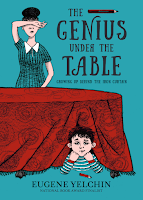
The Genius Under the Table

Yelchin, Eugene. The Genius Under the Table
October 5th 2021 by Candlewick Press
Public library copy

Young Yevgeny lives in Leningrad in the early 1970s, and shares one room in an apartment with his older brother, parents, and grandmother. His grandfather has been cut out of all of the family picturesbecause of circumstances the father, a staunch Communist, will not discuss. Even though his father maintains the party line, he also loves poetry, and in the privacy of their room, away from the prying ears of the apartment spy, Blinov. His mother, who works at the Vaganova Ballet Academy, which is connected to the Kirov ballet, is less discreet, sometimes complaining about the government while scrubbing the floor of the communal apartment. She is obsessed with the star of the ballet, Mikhail Baryshnikov, and wants Yevgeny to excel at something so he can have more privileges in his life. She even gets him admitted to her ballet school, but he is less than promising. His real talents lie in drawing, but because paper is scarce, he draws mostly on the underside of the large family dining table. Because the room is so small, he has a cot under the table (his brother sleeps on three chairs, to improve his balance for skating!) where he sleeps, and takes his father's pencil so he can draw on the underside. His mother is distraught when Baryshnikov defects, even though this was somewhat suspected, but Yevgeny's father discovers his drawings and brings him to the attention of a teacher. Sadly, after standing in line in freezing weather to purchase a book of poetry, his father gets pneumonia and dies. 
Strengths: This is a short, bitterly humorous book that offers a fascinating look at life in Communist Russia. Details about banned records, the obsession with denim jeans, spies living in one's apartment, and the desperate attempt of parents to improve the lives of their children are all made painfully clear, even to young readers. The mother's obsession with ballet as a way to succeed was interesting, considering the manner in which Baryshnikov managed to do this. The drawings are quirky, but capture the times well. Definitely a snapshot of time and place that also captures major social history, like Uhlberg's The Sounds of Silence or Hudson's Defiant
Weaknesses: The author was born in 1956, and the book makes it seem like he was about 10 when Baryshnikov defected, which isn't quite right. There was never a date stated, so I was a bit confused. Since this is shelved in the memoir section of my public library, I would have expected specific dates to be mentioned in the text. Younger readers won't mind, but I found it confusing.
What I really think: I liked this better than Arkady's Goal or Breaking Stalin's Nose. The details about living in the USSR are so good that I might purchase this . It has certainly gotten a lot of love from teachers and librarians. The short length works to its advantage, and I might be able to sell it as a Russian Wimpy Kid.
 Ms. Yingling

Thursday, March 03, 2022

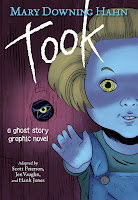
Took- The Graphic Novel

Hahn, Mary Downing, Peterson, Scott (Adapted by), Vaughn, Jen (Ilustrations)
Took (Graphic Novel): A Ghost Story 
March 1st 2022 by Etch/Clarion Books
E ARC provided by Edelweiss Plus

This graphic novel faithfully follows the story of the original, so I have tweaked my review of the original. 

When Daniel's father loses his corporate job in Connecticut, his family decides to move to rural West Virginia where the cost of living will be lower. Neither Daniel or his younger sister Erica are thrilled with this, especially when the children at school make fun of their east coast ways and also the fact that they have moved into a "creepy" house. Erica spends a lot of time talking to her doll, Little Erica, and the parents have trouble finding jobs. Daniel is in a bad mood, and when he gets picked on and children torment him about the disappearance of a young girl, Selene, years ago, he decides to investigate. With the help of Brody, a local who is at least sympathetic, he finds Old Auntie's house on the top of the hill. It has been abandoned, but Brody claims that at night Old Auntie, a conjure woman, reappears with her nightmare, skeleton hog, Bloody Bones. Erica retreats further and further into herself, talking to her doll, and after a fight with Daniel, disappears into the woods. No one believes Daniel that she has been taken by a creepy spirit, but when he manages to bring back a dirty and disheveled Selene, the O'Neill's recognize her as their daughter's friend who disappeared fifty years ago. Daniel is afraid that Old Auntie will keep Erica for fifty years, so he tries everything he can to rescue her, but he is up against powerful magic and powerful evil.

Erica undergoes a dramatic change once they move. The parents are too caught up in their own misery at moving and working unstaisfying jobs that they don't seem to notice at all. Daniel knows there is a problem, based on what he is seeing, but is he really imagining it? He doubts himself, and thinks that Erica is just making up things like hearing voices. 

The West Virginian setting also unsettles Daniel by introducing him to local legends and history unlike anything he has ever encountered in his life in Connecticut. The fact that most of the students don't accept him gives him few allies to back him up, but relying on Brody, as well as the O'Neills and a kindly bus driver (who once again made the story for me), gives him just enough information and support to save his sister. The graphic novel is a much more unflattering and unsympathetic view of West Virginia.

I much prefer Hahn's Deep and Dark and Dangerous or All the Lovely Bad Ones,or the newer The Girl in the Locked Room, and would have liked to see those recieve graphic novel treatment before Took. The drawings of Bloody Bones and the witch are unsettlingly, but not in a good way. The color palette seemed at odds with the story, and the drawings weren't in a style that I particularly enjoyed. 

My students seem to prefer original graphic novels to retellings, with the notable exception of the Stormbreaker and The Lightning Thief graphic novels. It's good to see more genres represented in this format, but I may pass on purchase.

Wednesday, March 02, 2022

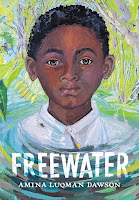
Freewater

Dawson, Amina Luqman. Freewater
1 February 2022, Little Brown Books for Young Readers
E ARC provided by Edelweiss Plus

Homer and his sister Ada are enslaved people on the Crumb's Southerland Plantation. Their mother, Rose, works in the house with Nora, the daughter of the owners, who has a strawberry birthmark on her face and has chosen not to speak, so is largely ignored by her family. When their mother planned to run away North, Homer did not want to leave his friend, Anna, behind, so the mother went back for her. When the mother did not return, Homer decided to go North with his sister alone. They were chased by Stokes, the overseer, but managed to get deep into the swamp, where they are aided by Suleman and taken to a hidden community made up of people who have also escaped plantations. Sanzi, a young girl who has been raised in this community, welcomes the new children, but is interested in how they could help provide for their tools or supplies for Freewater. Back at Southerland, everyone is preparing for a wedding. Anna and Nora both have plans for escape, some of which involve trying to use an herbal elixer to sedate the attendees. Homer also has a plan to go back to the plantation and to use the event to help his mother escape, and Suleman and Sanzi agrees to help, but mainly for their own reasons. With bounty hunters clearing land near the Freewater community and sends groups with dogs to search for runaways, will Homer, his family, and his new community be able to withstand so many threats?
Strengths: I had never heard of communities of former enslaved people living in the Great Dismal Swamp, and it's always good to see unknown history highlighted. There is enough description of life on the plantation and the poor treatment of the residents that even students who are not familiar with this time period as they should be will get a better understanding of why communities like Freewater existed, since living in the middle of a swamp was not a pleasant experience. Homer's dedication to his family, and his determined attitude to escape and make a life for himself and his sister will resonate with young readers who want to work against injustice. 
Weaknesses: Nora was an interesting character, but there were so many plot threads going on that her experiences could have been minimized. The treatment of white people who were different was interesting to see, however, and I could see why the author included this character. 416 pages is just a bit long for most middle grade readers. 
What I really think: This is an interesting fictionalized version of historical communities that have not been discussed in middle grade literature, and about which little is known. The author does a good job of creating a likely historical world and exploring the different circumstances that would have driven people there. A good addition to books like Christopher Paul Curtis' The Madman of Piney Woods and Rhodes' Sugar, both of which deal with historical effects of slavery but are written by Black authors and do not center the white experience, as so many titles from years past do.

Ms. Yingling

Tuesday, March 01, 2022

February Statistics and March Releases

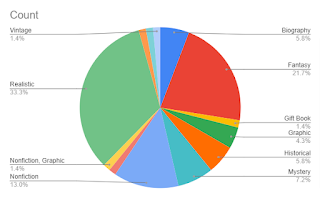
I've been better about keeping statistics; I have a spreadsheet and can make graphs, I just... don't. Still, baby steps. In February, I read 69 books, only 20% of which I plan to buy. Four biographies, 15 fantasies, (this is where I officially lost interest) 3 graphic novels, 4 historical fiction, 5 mystery, 11 nonfiction, 20 realistic fiction, 4 vintage (comfort reading), one short story collection, and one book in verse. You add it up. 

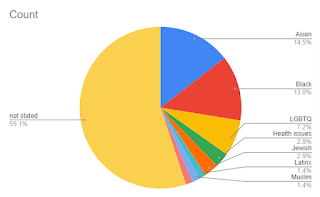
Here's a chart of the break down of Diversity. I read just about everything, so this is probably a good representation of what was published in middle grade, although of course not perfect. 

I imagine that I will become much more interested in working with statistics in June when I have to paint my kitchen. I haven't had a ceiling since October, but should be getting one in April.

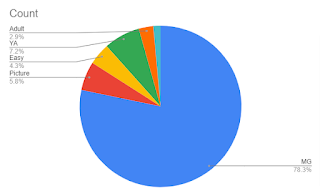
And yes. Primarily middle grade. That 2.9% adult represents two books!


Ms. Yingling

Wingbearer and Minecraft

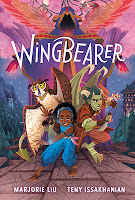
Liu, Marjorie M. and Issakhanian, Teny (Illustrations). Wingbearer
March 1st 2022 by Quill Tree Books 
E ARC provided by Edelweiss Plus

Zuli was orphaned as an infant and is being raised by birds and the bird spirits in the Great Tree. It's an idyllic life, and she gets to watch as the spirits of birds who have died reappear as leaves and then venture forth to be reborn. When no bird spirits seem to be leaving and the leaves on the dry are shriveled and brown, the community worries. Reluctantly, it is agreed that Zuli should venture forth into the real world to see what is happening. The owl, Frowly, accompanies her. The other world is destroyed, with wreckage everywhere. Zuli is attacked, but saved by Orien. Frowly is leery of their new friend, since he is a goblin, but he offers to take the two to the Nainai of his people to try to find out what is going on. Zuli, whose bracelet marks her as a special member of a long lost people. She is also being hunted by a Witch-Queen, who is sending all manner of dastardly creatures after her. Zuli holds her own, keeping her quest to find out what is happening with the birds foremost in her mind despite all of the obstacles the new world throws at her. Will she be able to survive giant spiders, dragons, and wraith-like creatures in order to put the bird world to rights? Another book is needed to finish this story!
Strengths: This was a great, philosophical fantasy adventure about existence and identity, offset by plenty of action and adventure. Zuli is an appealing character who loves her world enough to leave in order to save it. This has all of the good parts of a hero's quest story, and Zuli bravely travels all over the unaccustomed world, gathering supporters, following clues, and finding out secrets about her own past. The illustrations are bright, with heavily saturated colors that really make the scenes pop, and the facial expressions on the characters add a lot to the story. There is still a lot we need to find out, so I assume a sequel is in the works. 
Weaknesses: Frowly looked a bit like... Archimedes from Disney's The Sword and the Stone? I couldn't quite pin it down, but it bothered me. Orien didn't look like a goblin, but more like Malificent from Sleeping Beauty. Young readers will not have these previous examples of animated characters wedged so firmly in their memories. 
What I really think: I don't quite understand this, since it combines two things with which I personally struggle; fantasy and graphic novels. Still, it is well done, and will be appreciated by fans of Amulet, Aldridge's Estranged, and Stevenson's Nimona.


Okay. I try. I have read all of the Minecraft novels by Del Rey books, and I even understood some of them, even though I have never played Minecraft. I somehow missed the first book in this subseries (but will read it when it comes to my library), so started the second book without realizing there was a first. There were a lot of characters, a LOT of Minecraft details, and an ill-considered trip into the wilds because the village was boring that had me worried as an adult. Did I read Never Say Nether? Yes. Did I understand anything that happened? Not really. 

I have ordered the entire series, shelved trying to shelve them under MIN so they are easy to find, and the eight that I have (I have the remaining four on order) are never on the shelf. The students who read them tend to be video game obsessed, so they understand everything about the Villagers, Illagers, and Pillagers, and I figure that if they are READING about Minecraft, they aren't PLAYING Minecraft. 

So order these, even if you don't understand them. 


Dawson, Delilah S. Mob Squad (Minecraft)
September 28th 2021 by Del Rey Books
Haven't read yet

From the Publisher:
Come with the Mob Squad on an amazing adventure through the Overworld in this official Minecraft novel!

The village of Cornucopia is practically perfect in every way. Plenty of food, cozy homes, and a huge wall to keep everyone safe from the scary world outside. What more could a kid possibly need?

Well, a lot, actually.

Mal, a fearless girl, needs adventure, and her friends are right there with her: Lenna, a dreamer whose family underestimates her every day. Tok and Chug, brothers who love to build stuff (Tok) and smash stuff (Chug). They're best friends, and in a town whose grown-ups value safety over bravery and fitting in over standing out, they're the bad apples.

But when a mysterious mob sneaks past Cornucopia's defenses, the village is in huge trouble. And nobody knows what to do. Finally faced with the adventure she's always wanted, Mal and her friends defy the rules their elders have always followed and set out beyond the wall for the first time.

On their journey across the Overworld, they discover wonders they've never dreamed of and dangers they've never imagined. To save the day, they'll have to prove they're more than bad apples. They're the Mob Squad!


Dawson, Delilah S. Mob Squad: Never Say Nether (Minecraft)
March 1st 2022 by Del Rey Books
E ARC provided by Edelweiss Plus

From the Publisher:
An official Minecraft novel continuing the adventures of the Mob Squad.

The next exciting Minecraft novel from Del Rey and Mojang Studios, starring the heroes of Minecraft: Mob Squad as they journey further than ever before into the unexplored wilds and perilous depths of Minecraft's world.
 (less)