
Showing posts with label Great Depression. Show all posts

Thursday, April 26, 2012

Girls of Various Kinds

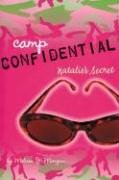
Morgan, Melissa J. Camp Confidential. (2005)
Natalie is not happy that she has to go to Camp Lakeview while her mother is out of the country-- she'd rather stay in New York City than to have to sleep on a thin mattress in a draft cabin, eat burnt French toast and shower in cold water every morning. There are some cute boys, and some of the girls in her cabin are okay, but basically the activities are all so juvenile, quaint and ... gross. Despite this, she has a decent time, getting into lots of scrapes with her new bunkmates. Natalie has a big secret about her father than she is trying hard to keep, but that proves impossible when he and his friend Josie show up to take Natalie away from camp is she is really miserable.
Strengths: This has the same "beach read" appeal as The Clique series. Natalie is spoiled and very rich, and there is a fair amount of girl drama. One of my students who really likes Ellen Conford loaned this to me, and likes the whole series, so I will definitely look into buying the first couple and see how they do.
Weaknesses: Like The Clique, this was a bit unbelievable and mean, but I think it will be popular. Also have a problem with a modern book having an eleven year old named Karen. When I was born, it was at #3, but in 2001 came in at #246. That said, my daughter's name doesn't even make the list for the year she was born!

Rosenthal, Betsy. Looking For Me.
17 April 2012
In Depression era Baltimore, Edith is part of a hard working Jewish family with twelve children. She is the "little mother" and often has to take care of her younger sisters and brothers. Her favorite brother is Melvin, but when he passes away, her mother decides she will no longer work at the family diner with her father, so Edith is sent to work there instead. Edith really wants to make a success of herself in school, because her teacher tells her that she is smart, but things do not look good for a child from a large family at this point in history.
Strengths: I enjoyed this because I liked All-of-a-Kind Family and other books about large Jewish families, and I learned several things about finances in the Depression. This is the story of the author's mother's life.
Weaknesses: Novel in verse. Some actually rhyme, but like the vast majority of this type of book, it reads more like prose broken up in arbitrary lines. Finding a middle grade audience for this will be tough.


Bell, Juliet. Kepler's Dream.
Publication date 10 May 2012, Putnam Juvenile. ARC from Baker and Taylor

Ella's mother is ill with cancer, so she is sent to the home of her quirky grandmother (known as GM), where she at least has the company of Rosie, the daughter of a man who works for GM. After a disturbance on the grounds one night (and there's a map at the beginning of the book), GM discovers that a valuable book has been stolen from their library; Kepler's Dream. Ella's grandfather, who was an astronomer and knew Michael Collins, valued the book, so Ella (who has nothing better to do with her time) decides that she will discover who the thief is. Her investigation involves research into a variety of books, and keeps her mind off her mother's sickness as well as the relative dysfunction of her relatives.
Strengths: Have a feeling that this will get a lot of buzz and may even win an award. It has all of the elements that adults tend to like in middle grade books; quirky characters, a bit of history, clue-oriented mystery, and family angst.
Weaknesses: I find that these elements make for a hard sell in my library, especially when the plot is rather slow paced.

Wednesday, February 01, 2012

Black History Month-- The Mighty Miss Malone

It’s Black History Month, so I’m going to try to post a book about a person of color every day. There are arguments back and forth about whether there should be a month that focuses on the achievement of black Americans, and even what term to use. I have decided to use black instead of African Americans, because not all black people come from Africa. It does feel a little funny using the term “black”, although using “people of color” doesn’t seem right either. As for the argument that there shouldn’t be a special month because all cultures in America should be given equal treatment all the time-- well, while this is true, we still have to deal with the problem of only 2% of the fiction books being published having people of color on the cover. My focus is to have all of my students be able to find people similar to themselves portrayed in books.

Curtis, Christopher Paul. The Mighty Miss Malone.
E ARC provided by Edelweiss’ Above The Treeline
What better way to start the month than to highlight a new book that features the bright and curious Deza Malone, who has this to say about the books that are given to her: “Some of the time I’d get snapped out of the book when I read things that I couldn’t pretend were about me, even if I had the imagination of Mr. William Shakespeare. Words like “her pale, luminescent skin: or her flowing mane of golden hair” or her lovely, cornflower-blue eyes” or “the maiden fair”. I would stop and think, No, Deza, none of these books are about you.” Deza is the best student in her school despite the fact that her family has fallen on hard times during the Great Depression. She keeps herself occupied by hanging out with her brother Jimmie, going to baseball games, and following the rise of Joe Louis. When her father is gravely injured in a fishing accident that kills several of their neighbors, times get even tougher for the family. After the father moves from Gary, Indiana to Flint, Michigan for a job, the family tries to follow him. Jimmie arranges a ride with a criminal type who runs a betting scheme, but the family decides it’s better to ride the rails and end up in a Hooverville type camp. When they are booted from that by the authorities, they manage to get settled in a small apartment. The mother works, Deza attends a school with white students where the teachers are prejudiced and black students are lucky to get C’s, and Jimmie starts to work in a speakeasy. After a while, they get letters and money from the father, but suspect that he is not the one writing them.
Strengths: Vivid picture of what it was like to live through the Great Depression, as well as what it was like to live with every day prejudice. Deza is a strong character, and her family tries their best to survive and prosper during a difficult time.
Weaknesses: Deza is a little full of herself at times, and the first few chapters of the book are anecdotal, which made me wonder if a plot would ever emerge. Once it did, the book picked up tremendously.
I was feeling uncharacteristically organized when I came across Doret's announcement at The Happy Nappy Bookseller for the Black History Blog Hop. There are all sorts of events going on, including Bookaholic's Africa Reading Challenge. The Brown Bookshelf is also showcasing African American authors. As I find more events and postings, I'll try to share them.

Now I'm going to go sob quietly into some nonfiction shelving. Or glue some books back together. I'm behind no matter how early I start!

Friday, December 16, 2011

All the Earth, Thrown to the Sky

Lansdale, Joe R. All the Earth, Thrown to the Sky.

You think the present economy is making your life tough? Jack's mother has died of dirty pneumonia, and his father hung himself hours after his death. Jack has to bury them both after an enormous dust storm. About this time, Jane and Tony come to his farm; their mother ran off with a Bible salesman, and their father has been killed by his tractor overturning on him. Jane has a plan to drive away from their doomed Oklahoma community by taking Old Man Turpin's car, since he died in the storm sitting on his front porch. Once the trio take off, they run into one trouble after another-- they get caught up with some thieves, get shanghaied into picking peas, have to ride the rails, and generally live from one meal to the next until they accept some help from kind people.
Strengths: Reminiscent of Hunt's No Promises in the Wind, it is a good reminder of how absolutely dire the Great Depression was. When people complain today's situation to that time, I want to slap them. I don't think that things have gotten bad enough now that parents are sending their children away from home because they have no food for them. This was an excellent depiction of this point in history, packed with action and adventure. Definitely buying for my students who want more books on this era after reading A Long Way From Chicago.
Weaknesses: I wished this had a period photo on the cover. Good try, but the boy's jeans and shirt look brand new.

Monday, July 18, 2011

Nonfiction Monday

Nardo, Don. Migrant Mother: How a Photograph Defined the Great Depression. (Release date 1/12)

From the Capstone Captured History series. E-ARC from Netgalley.com


Dorothea Lange was on her way home when she saw a sign directing people to a Pea-Pickers' Camp. Weary, she debated not going there, but she did, and the picture at the left is the result. This book chronicles not only Lange's involvement with the picture, but its lasting impact on American society. It follows the story of the woman, Florence Thompson, and how her experiences during the Depression mirrored those of many people.
Strengths: For an overview of the Depression from one very specific starting point, this is a great book. I am very interested in seeing the rest of the series. Don Nardo always does such well-researched and interesting nonfiction. I love to read this sort of book! (Which is why I jumped the gun a little, since it doesn't come out until January!)
Weaknesses: Would love to buy the series, but they are so expensive. I already have a biography of Dorothea Lange. Will out 6th grade be doing the unit on the Depression to go along with A Long Way From Chicago? Then I might buy this. It would also be good for the nonfiction unit.

Biskup, Agnieszka. Vampires and Cells.
E-Arc from Netgalley.com
I really, really wish that I had been at the development meeting for this book. It would have been fascinating. Someone would have mentioned that it's time for a new science series on the body. These are all dull, so another editor says "Hey, why don't we do it in a graphic format?" Someone else countered with "Oh, it's been done. How can we punch it up even more?" "MONSTERS!" an intern yells. "Let's have different horror monsters go about their business and intersperse those pictures in the background with factual information about cells. "

Then they contacted poor Agnieszka. She had bills to pay; any work was good. Her novel would have to wait while she poured her soul into this.

This was certainly not BAD, but it just made me shake my head. The information was all very thorough and well-presented, which made the vampires cavorting in the background... this must be for 3rd graders, and it is well-documented that I have trouble understanding books pitched to those younger than about fifth. I bought a Scholastic title about zombies and the human body for our science teachers, but this was just for a much younger audience, who would probably find them vastly amusing.

I also picked up about four YA books at the library. Three dropped the f-bomb in the first five pages. I don't care how good they are; I'm just not buying them. There was also one in "verse" that read like prose. *Sigh*