
Wednesday, April 13, 2022

Alice Austin Lived Here and Pride

Gino, Alex. Alice Austen Lived Here
April 5th 2022 by Scholastic Press
E ARC provided by Edelweiss Plus

Sam lives on Staten Island with their single mother, and can see the Statue of Liberty from their window. Downstairs neighbors Jess and Val, along with their baby Evie, provide a lot of positive support for Sam. Jess loves to bake, embraces a fat positive lifestyle, and is able to help Sam when they have questions about queer history and lifestyles, since Jess identifies as a queer femme and Val is nonbinary, as are both Sam and TJ. When a school project is assigned by social studies teacher Mr. Watras to promote a meaningful Staten Island resident from the last century or before, Sam thinks it will be just another glorification of a dead white male, but is pleasantly surprised to learn about the photographer Alice Austen. They and TJ visit the Alice Austen museum and request a library book for research, and find out that Alice Austen actually spent the end of her life living in Sam's apartment! Further conversation with Jess reveals that an older neighbor, Ms. Hansen, actually met Alice Austen, and is also part of the LGBTQIA+ community. Sam and TJ do a lot of work on the project, writing a good report and envisioning a statue that could be put in place, but are crushed when classmates who researched Henry Hudson have a higher grade, so have their entry is submitted to the official contest. Sam is sure that Hudson, who has plenty of other statues, was the winner because Mr. Watras "hates gay people". At the same time, Sam has a misunderstanding with Jess, and is crushed when Jess says that they aren't best friends. Jess isn't being mean; it's just hard for a 29 year old to be "best friends" with a 12 year old. Still, the loss of a supportive person in their life is difficult for Sam. Luckily, Ms. Hansen (who asks everyone to call her Leslie, because "only straight people cal me Ms. Hansen") is a former teacher and submits the Alice Austen entry. This is one of the four finalists, and Sam and TJ go to the council to make their final presentation. Is Staten Island politically forward enough to honor Austen and her work with a statue?
Strengths: There need to be more books about school projects, since middle grade life depends so deeply on them. I appreciated the fact that even though TJ and Sam weren't thrilled about the assignment to begin with, they both discovered things in it that interested them. TJ found the clothing styles especially intriguing, and was able to include their own interest in fashion in aspects of the project. Sam's mother is supportive, although doesn't make many appearances. The chosen family of Jess and Val, with the new addition of Leslie, supports the chosen family aspect of LGBTQIA+ life. Jess' fat positivity will also appeal to many readers. The story moves along quickly, and the Staten Island setting and inclusion of New York history contribute additional layers of interest. 
Weaknesses: There are some lengthy explanations of queer lifestyle that may date this book in the future and slow down the plot a bit, but are helpful in the current moment. Sam is slighty mean about other people's lifestyle choices even though they expect understanding and acceptance for their own. For example, they have a preconceived notion of Mr. Watras' thoughts and beliefs based on his age, general appearance, and older teaching style. We never really find out what he really thinks. 
What I really think: Reminiscent of Landis' The Not So Boring Letters of Private Nobody with current sociopolitical topics of Bunker's Zenobia July. It's especially intestesting that Gino lived in the same building depicted in this story, although in a different apartment than Sam and Austen. 
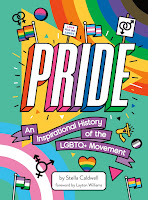
Caldwell, Stella. Pride: An Inspirational History of the LGBTQ+ Movement
Published April 19, 2022 by Penguin Workshop
E ARC provided by Edelweiss Plus

This history of the LGBTQ+ movement gives a good overview of history combined with more explanation of some specifics and a few short memoirs addressing the meaning of pride from currect activists. A lot of information is packed into 128 pages! Starting as far back as ancient Greece and Rome and proceeding quickly to the twentieth century, young readers learn about the general treatment of the LGBTQIA+ community and hear about significant individuals who forwarded the cause. From Anne Lister and Oscar Wilde to Marsha Johnson, Harvey Milk, and Glenn Burke, there are short biographies that are used to highlight changes in perception and acceptance. The Stonewall Riots are mentioned as a turning point (for further information on this pivotal event, Pitman's The Stonewall Riots is a must read), and the AIDS Crisis is described under the chapter heading "Disaster". The book concludes with chapters on "The Fight Goes On Around the World", which is helpful, since the book does have a slight UK focus when it comes to some individuals and legislation. There are also plenty of US connections, including a sidebar about the Native American concept of two spirited individuals. The format is very brightly colored, and there are a few photographs included with some of the biographies and historical descriptions. There is a glossary, index, and very nice and complete timeline. (That would be helpful to have as a fold out, even though thoses don't hold up to library use very well.) 
Strengths: This is a very thorough history packed into a very short book, and will introduce younger readers to the Pride movement in a very complete way. The addition of "what Pride means to me" essays by younger people will add to the appeal. 
Weaknesses: The print is a bit small, and middle grade could use a slightly shorter version that didn't delve into as many details of British legislation. Because so many LGBTQIA+ titles are currently being held to such unfair scrutiny by members of the public, I think it is important to mention that there is a definition of sodomy as anal sex, and very brief and completely nondescriptive mentions of the fact that sex occurred and there were political and sociological consequences for this. Absolutely nothing is instructive or graphic in any way; "had sex" is about as detailed as it gets. Students would get more information from the dictionary, but this is important for teachers and librarians to know should there be questions. 
What I really think: This was a very complete and interesting history of LGBTQIA+ history and the Pride movement, delivered in a very attractive book that is well formatted and illustrated. Since it is published by Penguin Worshop, I'm assuming that it will be paper over boards, which is a shame, since a jacketed hardcover would have a longer shelf life. It is a starting point for high school readers, since most of the history is not investigated in depth, but will be a lot of information for middle school students to digest, especially if this is their first foray into this social history. This does not have as much detail as Wind's No Way They Were Gay, but provides a lot more information than Lombardo's Inside the LGBTQ+ Movement (Gareth Stevens, 2018).

 Ms. Yingling

Tuesday, April 12, 2022

The Last Mapmaker

Soontornvat, Christina. The Last Mapmaker
April 12th 2022 by Candlewick Press
E ARC provided by Edelweiss Plus

In this Thai-inspired alternate historical world, Sai is attempting to distance herself from her impoverished upbringing in the Fens by her father, Mud. She has managed to get an assistantship with Paiyoon, a mapmaker, and has managed to get the proper clothing and backstory to continue working for him. As she approaches 13, however, she won't have the money to attend a good school or acquire a lineal (a piece of jewelry showing family heritage) of her own, which will jeopardize her position. When Paiyoon is invited to be part of a expedition motivated by the Queen of the Kingdom of Mangkon. A challenge has been issued for people to travel to the Sunderlands, which some believe don't exist, and acquire property for the kingdom. Paiyoon, as the last traditional mapmaker, is asked to go on the ship Prosperity and draw official maps of the expedition, as well as help with navigation. The Captain is a war hero, Anchalee Sangra. Paiyoon's writing has become very shaky, and he hopes that if Sai comes with him, she can do the work secretly and he can pass it off as his own. Being away from home for a year works well for Sai, so she sets off on the voyage. It's a difficult one, and she's sea sick at first, and there are some boys on the ship who know some of her secrets. She does manage to befriend Rian Prasomsap, a friend of the captains, and this proves to be useful. The journey becomes even more complicated when the captain becomes ill and Rian wants Sai to replace him, but that is just the beginning of their troubles. 
Strengths: Sai is a fantastic and resourceful character who has used her talents and energy to better her lot in life, even though it is very difficult to break away from her father and succeed in a world where lineage is extremely important. The lineals are an interesting concept; I wonder how many links (generations) most people in the US would be able to wear? The details of her work with mapmaking, especially working from scraps of cloth on which fishermen had drawn maps, were very interesting, and her relationship with Paiyoon was rather touching. They supported each other, although Paiyoon had no clue about Sai's background. It was also interesting to see women in leadership roles in an alternate Age of Exploration (around the 15th century to early 17th century) setting. There's plenty of seafaring action, as well as some political intrigue, and that makes for a well rounded adventure book with some modern political sensibilities made possible by the alternative world setting. 
Weaknesses: This almost felt like the second book in a series at first; I felt like I was missing a lot of details about Sai and her work with Paiyoon. Jumping right into her world gets the story off to a good start, but I would have liked a little more information about her world. 
What I really think: This had some similarities to this author's A Wish in the Dark as far as characters and themes are concerned, but lacked the magical elements. It reminded me a lot of Flanagan's Brotherband Chronicles in the amount of sailing details and actions, but was a complete 180 when it came to how colonialism is dealt with. Most older titles about sailing the high seas, like Cadnum's Ship of Fire (2003- a big favorite back int he day) or Dowsell's Powder monkey : the Adventures of Sam Witchall (2005) are going to have problematic content when dealing with exploration and colonization, so this is a good substitute if seafaring tales are popular with your students. (Does anyone still have Dana's 1840 Two Years Before the Mast?)

Monday, April 11, 2022

MMGM- Parks for the People and Zara's Rules for Record Breaking Fun

It's
Marvelous Middle Grade Monday
 at 
and #IMWAYR day 
at 
and 

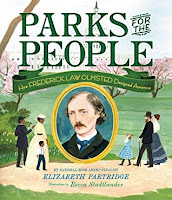
Partridge, Elizabeth. Parks for the People: How Frederick Law Olmsted Designed America 
April 5th 2022 by Viking Books for Young Readers
E ARC Provided by Edelweiis Plus

Hartford, Connecticut was a busy place in the 1830s, filled with factories and newly arrived immigrants. Frederick Olmstead great up in this environment, but loved escaping to nature. At 15, he became a surveyor's apprentice, and he found himself living as a young adult in New York City. He found work in 1857 as a supervisor for a project to clear land for a park. This project wiped out a Black community, Seneca Village, but proceeded anyway. Fred and a friend won a contest to design the park, and Fred went on to work as the Executive Secretary of the US sanitary Commission during the Civil War, where he tried to improve the health and safety of the soldiers. He was involved in the Gold Rush in 1863, and ended up spending time in Yosemite. The formation of a national park there destroyed a Native American community, byt cemented Olmstead's position as a much sought after designer of public spaces, and he went on to work on Prospect Park and the US Capitol grounds. Included at the end are notes, a timeline, and resources.
Strengths: I picked this up for two reasons: Peter Lerangis' Out of Time, and Partridge's Boots on the Ground. Readers who enjoyed the inclusion of Olmsted as a character in the third Throwbackbook will find just enough information about the park designer and his work to understand how important he was to the mysteries in the time travel. This is a great way for young readers to learn about an unusual but influential historical figure. I appreciated that there was a brief discussion about the Black and Native American communities that were destroyed; in the past, there wouldn't have been any mention of them at all. The picture book illustrations are beautiful, and give a really good feel for the spaces that Olmstead designed. I learned a lot, especially about the layout of the Capitol grounds. 
Weaknesses: There could have been a tiny bit more discussion about how the land was inappropriately taken from the Black and Native communities in the text without getting into a very deep discussion. It is mentioned some more in the end notes. I think that even young readers are more aware of these sorts of injustices and want them to be acknowledged. 
What I really think: This is such a fascinating topic that I would really like to see a longer book about Olmstead's career, something like Bruchac's One Real American: The Life of Ely S. Parker, Seneca Sachem and Civil War General  or Pearson's Fighting for the Forest: How FDR's Civilian Conservation Corps Helped Save America 

Khan, Hena. Zara's Rules for Record Breaking Fun
April 19th 2022 by Salaam Reads / Simon Schuster Books for Young Readers
E ARC provided by Edelweiss Plus

Zara, the older sister of Zayd Saleem, is the "queen" of her neighborhood, or is so called by kindly older neighbor Mr. Chapman. When Mr. Chapman moves, he leaves her a necklace with a crown charm on it, and Zara is very apprehensive about who might move into his house. Her neighborhood in Brisk River, Maryland has a lot of children, and they all play together pretty well. When the new residents include Naomi Goldstein, who is in Zara's grade, and her older brother Michael, Zara's mother has her take over cookies. Naomi is attending the Jewish Day School, but gets along well with the other kids in the neighborhood. Almost too well for Zara's taste, since her other friends start to bail on her plans to follow Naomi. When her uncle gives her some of his old books, include a Guinness Book of World Records, Zara decides to try to break records so that the kids in the neighborhood still find her interesting. She tries to make the longest chalk drawing, and spend the most time tap dancing and hula hooping, but is not successful in any of her endeavors. Naomi tries to make the biggest rugelach, but also runs into trouble. Zara's grandmother understands, and helps her by explaining some of the activities she did as a girl growing up in Lahore. When Zara finds out that there is a long, official process to make it into the record book, she starts a neighborhood record book, and the children find this a lot easier and more fun to try to get into. 
Strengths: Zara's neighborhood seems like such a fantastic one, with all of those children! I always wished that there were more children near me when I was growing up, and I know my own children liked to be able to walk or bike to find friends to play with. Her neighborhood is also very culturally diverse. Her jealousy of Naomi is understandable, and the way that she reacts to losing the interest of her friends is realistic. She has a great, supportive family, and the brief interactions with her grandmother are very charming, and everything works out well in the end. This was a fairly short book with great illustrations. 
Weaknesses: This must be set before the Zayd Saleem books, since he is in fourth grade in those, and in about second grade here, so I was a tiny bit confused. 
What I really think: My gold standard for early elementary realistic fiction is Carolyn Haywood's Betsy books, and this had the same great neighborhood feel. I can see Zara and Betsy hanging out with Nina Soni, Jasmine Toguchi, Cleo Edison Oliver, Lola Levine, Stella Diaz, and Mindy Kim

Sunday, April 10, 2022

Crazy in Poughkeepsie and 13 Things Strong Kids Do

Pinkwater, Daniel. Crazy in Poughkeepsie
April 12th 2022 (or 5/10/22?)  Tachyon Publications

After a brief stint in summer camp, Mick returns home to find that his older brother, Maurice (that's MAW- riss) has returned from his trip to India with Guru Lumpo Smythe-Finkel and his dog, Kali, who will be sharing Mick's room. Maurice has quickly tired of spiritual guidance, and pawns his guru off on his younger brother, and the two are soon off having adventures. They spend time wandering around the town, begging for food, play video games, and soon run into Mick's friend from camp, Vern Chuckoff, and his new friend, Molly, the main character in Adventures of a Dwergish Girl (Neddie & Friends #4)(2020). The two are "crazy" and " make noise at night in residential neighborhoods, drink wine at night and.. [are] getting into stealing porch furniture." Vern has been spray painting slogans on the many abandoned factories around Poughkeepsie, and getting stale doughnuts from Dunk'n Dunk. Before long, the Guru gives Mick a flute, and suggests he learn to play it, since the group gets tangled up with a ghost from one of the factories who likes the flute. Since the ghost is of a giant whale names Luna, this sounds like a good idea. They also try to encourage people to save the planet by changing the messages in fortune cookies, look for a blue circus wagon in which they later travel around to places like Romany Bill's Resort, Campground, Hobo Jungle and Junkyard before settling Luna into her destination and getting on with their lives. 

I'm not sure if Pinkwater books are really plot dependent; the point seems to be silly event after silly event, interspersed with odd characters and ridiculous anecdotes. You could say that books like The Hoboken Chicken Emergency (1977) or The Snarkout Boys and the Avocado of Death (1982) were the Wimpy Kid books of a previous generation in this regard, although Pinkwater stays true to his stream-of-consciousness, wacky style. Mick's interactions with Guru Lumpo Smythe-Finkel, Vern Chuckoff, and the Dwergish Molly (whose background is not well explained, but merely hinted at) are the primary focus of this unusual adventure. 

Pinkwater, at 80, remains steadfast in his style, and even manages to give a vintage flair to most of the book. The car of choice is 1958 Buick Limited Convertible handed down from a grandfather, there's a Gobble Gobble Country Kitchen, and a shout out to circuses, which I suspect Pinkwater wanted to feature more prominently in the book, but instead acknowledges that these are more of a relic of the past. 

Aaron Renier does a great job at capturing the feel of Pinkwater's (and later his wife Jill's) illustrations; sort of like a twelve year old was given a Flair pen and a pile of Mad magazines, and told to illustrate the book while sitting on a plaid couch in a basement rec room with incense burning. There is a lot of humorous detail in the pictures, and a retro feel to the clothing and settings that goes along quite well with Pinkwater's writing. 

The new millennium has brought a lot of changes in middle grade literature, with more books tending to harken back to the 1950s in their level of didactism about all manner of issues, and fewer books exhibiting a good sense of humor and lightheartedness. Pinkwater is the pastmaster of the goofy, and stays true to form with his newest adventure.

Pinkwater books were one of the first things I weeded when I started in my library in 2002; they didn't circulate well, were in bad condition (which means they circulated well at some point), and seemed very outdated. He definitely speaks to a particular audience, but since I don't have any of them in my student base, I will probably pass on purchasing this, especially since there are some updated conventions that are ignored, like the use of "crazy" in the title. 

Morin, Amy. 13 Things Strong Kids Do.
6 April 2022, HarperCollins
Copy provided by Young Adult Books Central

Putting a kid-friendly, more positive spin on her 13 Things Mentally Strong People Don't Do, Morin offers young readers a constructive work book to change their outlook on life. Covering important coping skills like "They Adapt to Change", "They Know When to Say No", and "They Persist", the chapters on each are set up in similar ways. Starting with an anecdote about a fictional child as an example, the principal being covered is then examined. Readers are encouraged to "Check Yourself" and reflect on their personal reactions to similar situations. There is a "Closer Look" at other experiences children might have. There is a space to write a reflection, "Proof Positive" going back to the fictional example, and a question about the character's growth using the suggestions that the book has offered. There are also exercises, traps to avoid, and quick tips to help process the emotions of given situations. There are engaging line illustrations to illustrate the stories and add interest.

Young readers who might be struggling with coping mechanisms will be able to see themselves in these stories, but also be able to distance themselves from their own emotions while learning to understand how their reactions can help form their experiences. This generally has a positive tone, and since the author is a psychologist, I will assume that the latest research is reflected in these strategies. This would be a useful book for parents to read as well, since much of the introductory chapter seemed directly at odds with the way I was taught to process emotion! Things do change, and sometimes it is hard for those of us who are older to keep up with current trends.

This is a paper over board binding, so the price point should be slightly lower than a dust jacketed hardcover and would be a good book for a young readers who struggles with emotions, organization, or event processing to have as a personal copy. Reading this at one sitting is not the most effective way to digest the information, and clearly none of the recommended work gets done consuming the book in this fashion. This is best used a chapter or a section at a time, so that appropriate thought and reflection can be given to each component.

I'm sure there are many children's self-help books out there, especially since children are all a bit fragile after the pandemic. Sadly, I don't know any titles to recommend. My mother would have scoffed at this one, since her approach to life , which she drilled into me, is completely dismantled in the first chapter as "trying to look tough". This is a great book to have if you, like me, think it best to pretend you don't have any feelings and try hard to look like you are doing well to other people. Of course, that wouldn't be enough for my mother; she would also admonish you to stand up straight and get your hands out of your pockets.

More on Ms. Morin can be found on her website: https://amymorinlcsw.com

Saturday, April 09, 2022

For the Record

Polak, Monique. For the Record
March 15th 2022 by Owlkids Books
E ARC provided by Edelweiss Plus

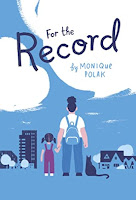
Justine and her younger sister Bea are struggling with their parents' divorce, and with going back and forth between their mother and father's places. Neither situation is ideal; their father's apartment is disorganized and run down, and he doesn't adhere to their mother's rules. Their mother has struggled with some mental health issues, and seems very fragile. Sometimes she doesn't eat and is depressed, and she has very strict rules for the girls. Justine has started a notebook to keep track of when her father doesn't follow the recommendations for what the two eat, what activities they do, and whether or not they follow safety procedures like wearing seatbelts. They do like the stability of the mother's, and the fun of their father's. He has his daughter from another marriage, Marry, living with his sometimes, and Justine especially loves to be with her sister. When he adopts a cat from a shelter, the girls are glad to visit their father and Sheldon, their new one eyed cat. They are also interested in spending time with their French grandmother, who has come to live with their father. Things take an unfortunate when Sheldon gets out of the house and runs across the street, and Bea follows. She's just four, so while she knows the rules, doesn't always remember them. Her father grabs her roughly to stop her from going into the street. When Justine realizes what has happened, she thinks that if she reports about this in a bad way, her mother will be happier. Of course, this also means that their father will lose custody, but Justine seems unconcerned about that, although she loves her father. When she tells her mother, the girls are assigned their own lawyer, who walks them through their experience at their father's. Eventually, they are no longer allowed to visit him at home, but must have a supervised visit. When the process drags on, the mother decides to take a better job in a different city, knowing that this will speed up the proceedings. Justine realizes that she could be further estranged from her father, Marry, and her grandmother if her mother is allowed to take them. Will she be able to tell the judge the truth about her situation?
Strengths: There are a lot of books that deal with the grieving process when a parent dies, but oddly few dealing with how children deal with divorce. It can be very complicated, and moving between households can be stressful. I liked how there were some positive things, and that Justine had a good relationship with her sister Marry and grandmother. It was also interesting to see part of the legal process involving custody, from Justine's perspective. There was even a little bit of friend drama. An author's note at the back explains the phenomenon of Parental Alienation Syndrome, which explains why Justine was fighting for her mother even though she loved her father. 
Weaknesses: It was a bit confusing to see Justine sabotage her father. I wish there had been more specific examples of her mother manipulating her, or that Justine had been shown thinking about what she was doing to her father and their relationship
What I really think: This was a bit more of an elementary school book because of the large amount of time spent with the parents. Middle school stories spend a lot more time with children distancing themselves of spending time on their own. Include this with other books involving children's experiences of divorce, including Payne's The Thing About Leftovers, Burt's The 12 Dares of Christa, Carr's 365 Days to Alaska, Murphy's Dear Sweet Pea, Mackler's Not if I Can Help It, Youngblood's Love Like Sky, Burke's An Occasionally Happy Family, and Draper's Blended. Interesting note: there seem to be a disproportionate number of books about divorce with girls as the main characters. Burke's title is the exception. 
Ms. Yingling

Friday, April 08, 2022

It's the End of the World

reynolds, justin a. It's the End of the World and I'm in My Bathing Suit
April 5th 2022 by Scholastic Press
E ARC provided by Edelweiss Plus

Eddie made a deal with his mother and stepfather-- he'll be responsible all summer, and they'll give him a little more freedom. It's gone okay all summer, but on the eve of an big end of summer bash along the shores of Lake Erie near Cleveland, he's run into a little problem. His plan was to ration his clothing and do all of his laundry at once, instead of regularly, the way his mother envisioned his end of the deal going. When she discovers that he was saving all of his dirty clothes in his closet, she cracks down-- he can't go to the bash until he does all of his laundry. He even tries to butter up his stepfather (who is NOT as good as his real father, who died two years ago) to get him to change his mind. No dice. Eddie is left to haul all of his laundry to the basement and spend at least two hours (thanks to the quick cycle) washing and drying clothes. Not far into the process, however, the power goes out. Clearly, he can't do laundry, so he starts to investigate what's going on. He runs into his friend Xavier, and later his best friend Sonia,and another friend, Trey, and his young sister Sage.They all notice that something is up with the neighborhood, since no one but the five seems to be around. The big concern, however, is that Sonia lost power in the middle of a video game, so they recreate that in the front yard. It's a lot of fun, but it makes them hungry, so they all collect junk food and have a feast. Still, there is no communication from any of their families. They spend the night, decide to "borrow" supplies from neighbors' houses, and finally come to the conclusion that they need to get to the lake to see what has happened to their families. It's too far to walk, so the obvious solution is to take Eddie's step dad's car-- a vintage Thunderbird left to him by his own father. The book ends on this cliffhanger, with the promise of a second volume. 
Strengths: The cover is fantastic, and the promise of a beach bash with picnic food, slushies, and a girl on whom Eddie is crushing is a wonderful combination. Young readers will understand Eddie's dislike of household chores and admire his plan to streamline his laundry process. The Cleveland setting is perfect, even if  "Carterville" is fictional. Eddie's step father seems like a great guy, but it's understandable that Eddie is having difficulty accepting him, since his father's death is still fairly recent. He is glad his mother is happy again, but his loss is still fresh. The idea of having the run of an entire neighborhood, and being able to break into neighbors' houses to borrow things speaks to a very deep desire to have unlimited freedom and see inside other peoples' homes-- think Nelson's The Girl Who Owned a City. There's something deeply satisfying about reading about children who have this kind of agency and opportunity to be free of adult supervision. The writing style is rather pell mell, echoing perhaps Eddie's ADHD. This has some overtones of dystopia (depending where the next book goes), but has an upbeat, fun treatment of it.
Weaknesses: 100 pages in, all that has happened is some family drama about Eddie's actions. He's still doing laundry. That is a VERY long time for, in the words of my students "Nothing to happen". By the time one of Torrey Maldonado's books would be over (150 pages), Eddie is still talking to his friends and debating what they should do. There's a lot of repetition as well. We hear many times about Eddie's older brother, how his step father isn't his Real Father, and how his laundry idea was such a great one until he gets stuck with a pile of dirty clothes. Perhaps the 1990s kids' movies on which reynolds has modeled his story operate in a similar vein, and I am just too old to understand this style. Also, what 12 year old has THAT many pairs of underwear? 
What I really think: In theory, this is a fabulous idea, but the execution is somewhat wanting for me personally. The fact that this is not a stand alone is unfortunate. I may wait to see how many books it takes to wrap up Eddie's story, and the direction the story takes, before purchasing. The cover is fantastic, and I think my readers will immediately pick it up, but I also wonder how long they will spend reading it before returning. Some of my students give up on Horowitz's Stormbreaker after three chapters because it seems to dull to them.  

Thursday, April 07, 2022

The Sisters of Luna Island

Hackney, Stacy. The Sisters of Luna Island
April 12th 2022 by Simon Schuster Books for Young Readers
E ARC provided by Edelweiss Plus

Marigold Lafleur lives on Luna Island, where her family has practiced aromagic for generations. Recently, however, the use of flowers and scents to prepare magical charms has caused Marigold, along with her mother and sisters Lou and Birdie, to come under suspicion. A spell that Marigold created went badly wrong and caused an earthquake in her town, and everyone at school blames her. She blames herself, as well, since her father was badly injured right before he was supposed to go away for an extended work trip, and he is now living on the mainland with his sister so he can be near therapy. Marigold misses him, and worries about how people will treat her when the new school year starts. Luckily, her best friend, Sam, still talks to her, but she's worried about her mother. She was reluctant to practice aromagic for a while after the earthquake, but has recently been creating charms for people who ask for them. She tells Marigold that she informs all purchasers of the charms "vexes", which are things that could go wrong. Marigold suspects that something is really wrong, since there is a rotten stench hanging around the town, which is stronger around her house. Her mother denies that anything is wrong, but when Marigold does some digging, she finds that there was a curse on her family. She hopes to be able to remove it herself, but manages to make things worse. She makes Sam angry, causes trouble for the school play in which she has a starring role, and causes her sisters to have bigger and bigger problems. All of the things she does to remove the curse seem to fail. After her father visits, she starts to realize that some of the bad circumstances in her life are not the fault of the curse and would have happened anyway, but she knows there is still some danger from it. Will she be able to figure out a way to remove it before further harm comes to her family?
Strengths: Marigold's love of her family is very evident, and she wants the best for her sisters and her mother. Like many tweens, she feels like everything is her fault, and if she could just do the right thing, circumstances would improve for everyone. In Marigold's case, this involves a lot of delving into family history, and some forays into questionable magic, which is always exciting. Luna Island is an interesting setting, and the brief inclusion of some mean girls to whom Marigold stands up adds just the right amount of friend drama to a magical story. I enjoyed how each chapter started with the magical properties of scents or flowers, and had charming line illustrations. I'd love to see more page decorations in middle grade novels!
Weaknesses
: My students seem to prefer magical realism that is a bit happier; the aromagic Marigold experiences has rarely made her own life better. I'd like to see more books where magic isn't endangered or seen as a bad thing. 
What I really think: This felt a bit life Harrison's A Pinch of Magic , Littlewood's Bliss Bakery books, or Nichol's The Apprentice Witch. It's clearly set in the US, but did have a bit of a British feel to it. A great choice for readers who like their magical realism on the bittersweet side. Hand to fans of Ingrid Law or Natalie Lloyd. 
 

Ms. Yingling

Wednesday, April 06, 2022

Karthik Delivers and Alice Waters Cooks Up a Food Revolution

Chari, Sheela. Karthik Delivers
April 5th 2022 by Amulet Books
E ARC provided by Edelweiss Plus

Karthik lives with his parents and sister in Boston in 2009, where they have an Indian grocery store in the Allston neighborhood. Karthik has two friends that live nearby, Miles, who loves Boston history, and Binh, whose family runs a Vietnamese restaurant. Because the grocery store isn't doing all that well, Karthik's father has a new scheme for him to deliver groceries to customers within a two mile radius. It's a lot of work, and requires frequent ice cream breaks with his friends. During these, other kids from his school, Jacob and Hoodie, give him a hard time and make fun of his name. At one point, they even steal his money. They are friends with Juhi Shah, whom Karthik likes, and Sara Rimsky, a girl on whome Binh has a crush. The girls don't correct the boys, which is confusing to Karthik, especially after he and Juhi have a good conversation at temple while his sister is involved in a dance recital. One frequent customer of the store, Shanthi, is a student at Boston University in the playwriting program. She isn't talking to her parents, since they disagree with her path. She thinks that Karthik would be a great choice to play the lead in her short play about Leonard Bernstein, since he bears a passing resemblance to the musician and also has a good ability to memorize things, especially lists. Knowing his parents wouldn't want him to take time away from deliveries to do this, Shanthi places an order every day for two Fantas and a bag of spicy chips, and the two rehearse when he delivers. The grocery store continues to struggle, especially when a new restaurant, House of Chaat, opens nearby. This is run by Juhi's uncle, who had worked with Karthik's dad in the past. As the performance of the play approaches, Shanthi has Karthik participate in some local performance art, and sends out a flyer with his name on it. His parents aren't thrilled when they find out, especially since there are big changes in store for the family. Will Karthik be able to convince them that he can follow his own dreams and not necessarily theirs?
Strengths: This was a great book about a character in a specific setting doing several very interesting things! Just hanging out with his friends, eating ice cream and going to the different restaurants seemed like fun, and delivering the groceries introduced him to lots of different people whose lives he was able to positively affect. Add to that Shanthi and her play, which he hides from his well meaning but academically focued parents, and the story becomes a really fun juggling act. I loved how Karthik got to know more about his customers and started to like them more, and how his mother decides to go to school to become a doctor, since she is always pushing Karthik to do this so she can live vicariously. The 2009 setting makes sense, given the economic downturn of the time, and the father's struggles with the store were shown just enough-- we see how the family situation impacts Karthik. Juhi is a complicated character, and her interactions with Karthik are complicated but instructive. The racial problems are not a huge part of the story, but their inclusion gives depth to the characters. I really enjoyed this one, even if it did make me hungry for ice cream and Indian food!
Weaknesses: I got a bit confused as to where the family lived-- they seemed to hang out at the store a lot, and Karthik goes to school nearby, but they get a train to their home? Perhaps if I were more familiar with Boston, I would have understood this better. 
What I really think: Definitely purchasing, and this cover will appeal strongly to my readers. Chari has done interesting work with Finding Mighty and the Mars Patel series, but I think she's hit her stride here with this humorous, realistic story. A must purchase for middle school libraries. 

Stanley, Diane and Hartland, Jessie (illus.) Alice Waters Cooks Up a Food Revolution
January 18th 2022 by Simon Schuster/Paula Wiseman Books
Copy provided by Young Adult Books Central

Born in 1948, Alice Waters was very much a product of her time. Her family grew food on their property, so she was familiar with fresh produce, but they also embraced the convenience food trend of the 1950s, with it's canned and premade items. She went to college and was able to study in France, and came back with no particular purpose. Cooking French food, which was her passion "wasn't a job", but with the financial backing of family and the help of friends, she managed to start a restaurant in 1971, which she named Chez Panisse. It was dedicated to the freshest ingredients, and the untrained but dedicated staff produced one set menu every night. It was difficult to find organic ingredients that didn't come from industrial farms, but Waters scoured the Bay Area for ingredients, and was part of a movement of California Cuisine that spread through the United States in the 1970s. Later, in the 1990s, she worked with local schools to start gardens in schoolyards so that children could learn about science and also have tasty and healthy food. There are now over 5,000 school garden projects, and her restaurant is still in business. 

I loved the illustrations in this one, because they had a fun, 1960s vibe, with lots of detailed scenes and sense of movement, with a turquoise palette with pops of red. Even the font (Tox Typewriter) captures the retro feel. 

This is more of a story than a biography, and there are anecdotes about a friend who bet someone that he would eat his shoe if he lost the bet, and Alice helped him cook it, pages that detail the themed menus, where garlic might even appear at desert, and stories about the people who worked in the restaurant. There is a little bit of information about food during this time period, but most of the text is concerned with Alice's interests. 

There is certainly a lot of privilege in Waters' efforts to put together a restaurant-- the price of a meal there in 2022 is $175, which I can't even imagine. The same could be said of most food innovations that are heralded by the public. There's not an exciting story to tell about those of us whose diets consist of lots of canned food and the occasional fresh fruit! I did like that Waters was able to use her influence after the success of her restaurant to help children learn more about healthier and more planet friendly ways to arrange their diets. 
 
With the notable exception of Julia Child, who has had a number of picture books written about her, there are not a lot of books about cooks who have had an impact on society. Rockliff's Try It! How Frieda Caplan Changed the Way We Eat being a notable exception. There is also the interesting European publication Veggie Power by Olaf Hajek, but that's just an overview of vegetables. Alice Waters Cooks Up a Food Revolution is a great choice for young readers who want to experience the Best. Food. Ever.!, and also a fun inclusion in a list of biographies for women's history month. 

Tuesday, April 05, 2022

Shinji Takahashi and the Mark of the Coatl

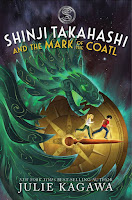
Kagawa, Julie. Shinji Takahashi and the Mark of the Coatl
April 5th 2022 by Disney-Hyperion
E ARC provided by Edelweiss Plus

After a house fire killed his parents when he was a baby, Shinji has lived with his Aunt Yui, a globe trotting adventurer who is always looking for exotic products to bring back for her shop in Miami, Florida. Their latest mission finds them on the banks of the Zambezi river, and all Shinji wants to do is find an air conditioned place to play video games. His aunt sets him a quest-- take some money and buy an object that speaks to him. He grumbles, but sets off. In a small shop, he finds an idol of a serpent that the owner agrees wants to be with him. He bargains for it and sets off to meet his aunt. Unfortunately, he is beset by goons who also want the idol, and when he refuses and takes off, they chase and subdue him. He wakes up and finds that he is a prisoner of the Hightower Corporation. They really, really want the serpent, which is a Mesoamerican coatl, but it has magically been absorbed into Shinji and appears on his arm as a colorful tattoo. He meets Lucy, who says she is working for the corporation under duress. She has created a small mechanical mouse that can spy on Gideon Frost ans his workers at the corporation, and when the two realize that Shinji is in danger, Lucy uses her skills to get the two to California on a bus. There they hope to find The Society of Explorers and Adventurers (SEA), and get help to find Shinji's aunt and to deal with the idol. SEA tells them that the need to take the idol back to the temple from which it was stolen. This is, of course, an arduous journey, but the have traveling companions from SEA who seem to know what they are doing. Lucy has a big secret that is exposed. Once they arrive at the temple, they must fight the Weaver, a giant spider, as well as people from the Hightower Corporation who have followed them. Will Shinji be able to put everything to rights and get back to his aunt? And will he ever again be contented just playing video games?
Strengths: This was a strong middle grade entry from YA author Kagawa, whose Iron Fey (2010) series is one my students have recommended to me over the years. Shinji is a bit reluctant at first, but jumps right into the adventure. Lucy is enigmatic at first, but he somehow trusts her because she seems to know more than he does, even if the reasons for this scare him once he figures them out. SEA is a seasoned group that reminds me a bit of the 2004 movie The Librarian, and I was more than happy for the older, more seasoned adventurers to help out-- Mesoamerican jungles are not for the uninitiated! I was able to believe the magic, and the adventure is solid. I was able to remember the plot without taking too many notes, which means that my students will be able to hold onto the plot as well. I'm looking forward to another book in the series. 
Weaknesses: The cover isn't great-- it's a bit dark, and the children look rather young. Also, I would have liked more information on how to prepare for an adventure in the jungle. Having read Seiple's Death on the River of Doubt, I know that preparation is key!
What I really think: This has a feel of Gibbs' Charlie Thorne and the Lost City (2021), Vegas' Pyramid Hunters (2016) or Stokes' Addison Cooke and the Treasure of the Incas (2016). I'm a fan of fantasy adventure books that are fast paced and weave in some culture, and this is just the ticket. 

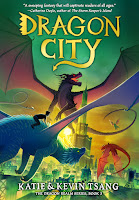
Tsang, Katie and Kevin. Dragon City (Dragon Realm #3)
April 12th 2022 by Union Square Kids
E ARC provided by Edelweiss Plus

I loved the first book in the series, and this is a great choice for middle school libraries where dragon books area popular. I also like that fact that it's not a hugely long book, so it's a good introduction to fantasy titles. I'm still not entirely sure if this is the last book in the series; Dragon Rising is out 3/17/22 in Australia, so I guess there are more adventures to be had. I struggled with reading this one myself because it felt very video game like, but this will appeal to readers who like books like Mancusi's Dragon Ops and Dawson's Minecraft: Mob Squad. Buying for my library, but had trouble understanding! 
From the publisher:
"In an alternate reality, 5,000 years in the future, the evil Dragon of Death has become ruler of Dragon City. Humans now live to serve the dragon population and it’s no different for Billy Chan and his friends. After losing contact with their own dragons, they’re determined to track them down in this new city, even if it means putting their own lives at risk. But one dragon has turned to the dark side and has no plans to return. With the help of a new clan of dragon friends, can Billy, Dylan, Charlotte and Ling-Fei undo the Dragon of Death’s villainous work or will she triumph eternally?"
 

Ms. Yingling

Monday, April 04, 2022

MMGM- The Woman Who Split the Atom: The Life of Lise Meitner, The Uniform Life of Holly-Me

It's
Marvelous Middle Grade Monday
 at 
and #IMWAYR day 
at 
and 
Moss, Marissa. The Woman Who Split the Atom: The Life of Lise Meitner
April 5th 2022 by Abrams Books for Young Readers 
E ARC provided by Edelweiss Plus

Born in 1878 in Austria, Meitner faced a lot of obstacles in her quest to obtain an education. Always of a scientific bent, she had a supportive family that allowed her to study, and when she was 19, the laws changed and allowed women to go to universities. They had to pass rigorous tests, and she and her sister studied for them without the benefit of formal high school education. She got a doctorate in physics and was lucky enough to find Otto Hahn to work with. He treated her as an equal, and fought for her to be allowed to work, even though most places were not quick to include women in their departments. When she finally got to a place where her expertise and knowledge was valued despite the fact that she was a woman, Hitler was coming to power. Since Meitner was Jewish, she eventually lost her position. Not believing that she was in real danger, despite the fact that many other Jewish scientists were leaving, she stayed much longer than was safe. It took the combined efforts of many fellow scientists to get her to safety. She continued to work, and made a crucial interpretation of Hahn's experiments that solved the mystery of splitting the atom. She was horrified that her work was used for the atomic bomb. She eventually came to the US to teach. Her work was not given the accolades it deserved when she was alive, but at least she is now given credit. 
Strengths: This was a very complete, well written biography of an impressive scientist who overcame a lot os societal disadvantages. The graphic novel style illustrations at the beginning of the chapters will draw in some readers, and are quite fun. There were a lot of details about the different subjects she studied and experiments she did, and the harrowing job of getting her out of the country is well explained. I also appreciated the author's note about how people today might think she was foolish, but how Moss' own family letters from people in similar situations also didn't seem as alarmed as they should have been. Great combination of science and history in an engaging read.
Weaknesses: Moss' Amelia Notebook (1995) books were popular before graphic novels really took off in my library, and I kept thinking of those at the beginning of every chapter. I wish those hadn't fallen apart!
What I really think: This is a great book for research, but I'm not sure how many of my students will pick it up for pleasure reading. Had Moss done the entire book in the graphic novel format of the introductory panels, they might get through that! I'll purchase a copy to update the 2000 biography I have, since this was particularly well done. 

Matula, Christina. The Not-So-Uniforn-Life of Holly-Mei
April 5th 2022 by Inkyard Press
E ARC provided by Edelweiss Plus

When her mother gets a fantastic new job as the Chief Operating Officer of an international company, Holly-Mei's family, including her sister Millie and British-born father, move to Hong Kong for two years. While her grandmother stays behind, her father has a brother living in the new city, and her cousins go to the same elite private school she will attend, Tai Tam Prep. It's a tough move, and the heat of Hong Kong is a change from Toronto, but Holly-Mei had recently had a big fight with her friends back home because of her habit of blurting things out, and she is glad for a new start. Life in Hong Kong is different; they have a housekeeper who cooks their meals, her mother is suddenly obsessed with meeting "the right people", and the privileged students at the school include mean girl Gemma, with whom Holly-Mei doesn't get along. When she has to work on a school project with Gemma, things get complicated, especially when Holly-Mei submits a project proposal without checking with her group. There's a lot to learn about going to school with the children of the wealthy and influential, and Holly-Mei has to navigate upgrading her sporty look, getting along with classmates, and settling in to life in a new environment. 
Strengths: It is always great to see stories set in other countries, and Holly-Mei's time in Tai Tam Prep is a glimpse into a very rarified lifestyle that my middle class Midwestern readers will find fascinating. Having taught at a much less fancy private school (and read Crazy Rich Asians), the level of privilege seems about right, but it's hard to get my brain around having a housekeeper! There's enough friend drama and some family drama to hit the sweet spot of middle grade, and I appreciated that while Holly-Mei missed her grandmother and wasn't completely thrilled with moving, she tried to make the best of it. Like Linda Gerber's coverage of Japan, Matula's experience living abroad adds a lot of detail. 
Weaknesses: There could have been just a tiny bit more information about this history of Hong Kong for young readers who might not be familiar with the background. 
What I really think: This felt a bit like Lisi Harrison's The Clique, but set in Hong Kong! I loved the cast of characters, the details about going to school, and the over-the-top school production. Definitely purchasing. 

Sunday, April 03, 2022

Grow Up, Tahlia Wilkins

Evans, Karina. Grow Up, Tahlia Wilkins
April 19th 2022 by Little, Brown Books for Young Readers

A lot can happen in the space of a couple of days, and when Tahlia's mother goes out of town for a business conference, leaving Tahlia at home with her father and older twin brothers on the last day of school, things go badly wrong. Tahlia gets her period for the first time and is ill-prepared, especially since she has Noah's pool party to attend! With the help of her best friend, Lily, she manages to get to a local store to buy tampons, but has a lot of trouble using them and soon needs more, so she "borrows" some by sneaking into a teen neighbor's bathroom. She doesn't want her dad to know, so when she has a leak while out to dinner with both Lily and Noah's families, she is mortified, and again relies on her friend to help her out. Lily's mother is eight months pregnant and rather preoccupied, so the girls take it upon themselves to spill a virgin margarita down Tahlia's front to distract from the other stain, and end up in the fountain outside the restaurant trying to further obscure things. Feeling fairly confident at Noah's party, Tahlia runs into Jackie, who used to be friends with her and Lily, but started to act more mature and distanced herself from them. She is friendly at the party, but warns Tahlia that she should change her tampon every hour to avoid Toxic Shock Syndrome. This panics Tahlia, but it's Lily's surprise announcement that crushes Tahlia's spirit and has her calling her father to pick her up from the party. Luckily, her dad comes through with a lot more support than she would have imagined, and when her mother returns, Tahlia is further assured that everything will work out for the best. 

If you believe my fourth grade diary, topics revolving around puberty are really interesting to middle grade readers. Tahlia and her long suffering (and somewhat younger acting) friend Lily navigate the sometimes treacherous waters of first periods, boy-girl parties, and changes in friendship with humor and a positive attitude. They are going into eighth grade, which will make their adventures very appealing to a variety of readers who might be facing the same issues or looking forward to the day when they do. 

It was interesting that while Tahlia was very sure at first that she would be mortified to tell her father, he eventually was a big help, and made her feel more comfortable telling him what she needed. This is a great message whose time has really come. 

The fact that the main action of this book took place in just two days was interesting; we pick up the story again after the summer has passed and Tahlia is starting eighth grade, but most of what transpires is very localized. This heightens the emotions and allows for a deep dive into Tahlia's struggles with feminine protection. I especially loved the girls' encounter with an older woman who sympathizes with them but also opines that they are lucky they don't have to deal with sanitary belts! Hopefully, these details will help readers better prepare so that they never have to be in Tahlia's difficult circumstances.

Readers who found Harrington's Revenge of the Red Club and Williams' graphic novel Go With the Flow instructive will appreciate Tahlia's efforts in dealing with her period. This would make a great gift for a younger girl, perhaps accompanied by an informative fiction book such as Own Your Period: A Fact-filled Guide to Period Positivity by Chella Quint and Giovana Medeiros or at least a pamphlet and some menstrual hygiene products so they aren't caught in Tahlia's predicament. 

It did seem odd that Tahlia's mother hadn't talked to her more about this or stocked supplies and left information on how to use them. It also seemed unlikely that a woman store clerk would get on the loud speaker to do a price check on tampons, or that Lily's mother couldn't have been consulted. Of course, if Tahlia had had this support, the story wouldn't have existed, so there's some artistic license at play.Ms. Yingling

Saturday, April 02, 2022

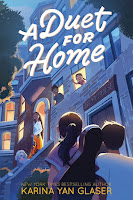
A Duet for Home

Glaser, Karina Yan. A Duet for Home
April 5th 2022 by Clarion Books
E ARC provided by Edelweiss Plus

June and her sister Maybelle have been struggling since the death of their father in an auto accident, mainly because their mother has shut down. She stops going to work, and authorities arrive at the family's apartment to evict them. June is given a slip for a homeless shelter, helps pack their belongings, and is soon at Huey House in the Bronx trying to understand what is happening. Her mother's primary language is Cantonese, so June interprets a lot. Family counselor Mrs. G. is helpful and kind, but the director of the shelter, Mrs. McMillan, is not. One of the shelter rules is "no musical instruments", but June is determined to hold on to the viola her father gave her. Luckily Marcus, one of the staff, makes sure it is safe and manages to get it to the family's room when Mrs. McMillan isn't looking. We also meet Tyrell and Jeremiah, who have been living in the shelter with their mothers for three years. The two are very close, and often pull pranks on Mrs. McMillan. One of these goes wrong and sprays June and Maybelle with cranberry juice, but the boys feel bad and do apologize. June and Maybelle get transportation back to their school in Chinatown, but must get up at 5:30 a.m. and endure the long bus ride. Their mother is still very remote, but Mrs. G. helps the girls get settled in. The boys help June find a place to practice her viola, and one of the older women in the building managed to get June an audition with a woman who lives next door and teaches strings. Domenika is brusque, but when Maybelle settles down a dog she is pet sitting, she reluctantly agrees to teach June. When Tyrell accompanies her and mentions that he has always wanted to learn to play the violin, he gets instruction as well. The homeless shelter is under a lot of pressure to move residents out of the shelter into more permanent housing, both to make way for other families in need but also to lower the number of homeless residents in the city. Vouchers are being made available, but these are often applicable only in undesirable housing that is substandard or far from public transport. When the children find out that the new city policies are going to affect them, they decide to speak up. Will they be able to make a difference?
Strengths: The note at the beginning of the book describing Ms. Glaser's early work experience with New York's largest provider of transitional housing was very interesting. "Writing what you know" is always good advice, and A Duet for Home has a lot of good details about June's experiences, having to travel back and forth long hours to school, getting involved with the community at Huey House, and getting help from Mrs. G., as well as information about the politics of homelessness in a big city. The addition of June's love of music, and her continued interest despite her difficulties, adds an interesting layer. Tyrell and Jeremiah are great friends, and it was interesting to see the differences in their experiences at the shelter. Giving the children agency to gather information about the suspicious motivations of the shelter leaders and to complain to public officials will go over well with young readers who are interested in activism. The city setting is well described, and readers of Glaser's The Vanderbeekers will enjoy another perspective of New York City. 
Weaknesses: While it's great to think that public officials would listen to children and change policies, it seemed a bit unlikely. There are a lot of complicated issues at work that aren't so easily resolved in real life. 
What I really think:It's interesting to see the evolution of books dealing with homelessness. A small sampling includes Bauer's Almost Home (2012), Balliet's Hold Fast (2013), Aust's Shelter (2014), Messner's Exact Location of Home (2017), Stevenson's Lizzie Flying Solo (2019), Pyron's Stay (2019), Svetcov's Parked (2020),and Matheson's Shelter (2021). More recent titles are starting to address the political implications of homelessness and not just the experience of the family. I think we will continue to see more of this in middle grade literature. 

Friday, April 01, 2022

When the Sky Falls

Earle, Phil. When the Sky Falls
April 5th 2022 by Bloomsbury Children's Books
E ARC provided by Edelweiss Plus

**Some spoilers**

While most children in London are being sent to the countryside, Joseph, who is from the North of England, is sent into the city by his grandmother to live with Mrs. Farrelly while his father is away fighting. Joseph's mother left when he was young, and his anger has lead to behavior his grandmother doesn't feel she can control. Things are dire in London, but Mrs. Farrelly never shirks from hard work. She gets Joseph settled in her home, which has minimal comforts, and takes him with her to the zoo her family has run for generations. The zoo has fallen on hard times, and most of the animals have been sent to other zoos, since it is difficult to obtain food, and the war effort keeps trying to requisition the iron fences. Those fences are important to keep Adonis, a silverback gorilla, from getting loose. He is grieving the loss of his mate and his child, and is clearly stressed by the nightly air raidss. Joseph is supposed to help Mrs. F. with the zoo chores along with Syd, who is living with an aunt after the death of both of of her parents in a bombing. Mrs. F. enrolls Joseph in school, but he runs into trouble because he still can't read. The words "swim on the page", and even though his teacher and Mrs. F. are supportive, they lack the information needed to help him. When a school bully comes into the zoo to terrorize Joseph and gets too close to Adonis' cage, the boys father complains and letters arrive warning Mrs. F. to relocate Adonis or see him shot. She tries, but it's hard to find someone to take him. Joseph tries to get around the public tests that the principal terrorizes the students with, but when he is caught memorizing a passage instead of reading it, the principal canes him. Luckily, Mrs. F. arrives and takes his side. With time running out, will Joseph be able to champion Adonis with as much success?
Strengths: During this school year, I have thought almost daily how glad I am that I am not living in London during the Blitz. Really. Not only was there the incessant bombing, but the lack of supplies must have been challenging. Joseph's school had very few students, since most were sent to the country. Can you imagine teaching in such a situation? The details about clothing, food, heating (at one point, Mrs. F. runs out of coal, so they burn damp wood from bombing sites in order to keep warm), and nightly excursions to the back yard bomb shelter or the Tube station are absolutely chilling. Mrs. F. heads straight to the zoo any time there is an air raid-- so she can wait it out with a rifle pointed at Adonis. This is the real life details that sparked the whole book, and is such a devastating thought. Joseph's struggles are realistic, and the treatment in the 1940s or children with learning disabilities is shocking to modern sensibilities. Joseph has endured multiple traumas, and continues to be beset with new ones. The highlight of the book, however, is the heartwarming part-- Mrs. F. has had trauma as well, and she is able to overcome her past to take care of Joseph when he really needs someone to be on his side. 
Weaknesses: There is a lot of sadness in this. *Spoiler* Things don't end well for either Joseph's father of for Adonis. 
What I really think: This was an enthralling read, in the vein of Boyne's Stay Where You Are and Then Leave (2014). There are so many untold facets of World War II, and the fate of zoos is harrowing and yet fascinating. When I visited London in 2000, I have vague memories of seeing an aviary, perhaps in Regent's Park, that had escaped the bombing. That stuck with me, and made When the Sky Falls feel even closer to home. An excellent read. 

April Releases


Thursday, March 31, 2022

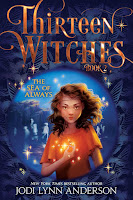
The Sea of Always (Thirteen Witches #2)

Anderson, Jodi Lynn. The Sea of Always (Thirteen Witches #2)
April 5th 2022 by Aladdin
E ARC provided by Edelweiss Plus

Rosie and her friend Germ managed to survive in the previous book, and find themselves traveling the Sea of Always in a time whale to California in 1855, where Rosie's brother is supposedly sequestered by the Time Witch. It's very luxurious inside the whale, and anything they could want is provided, but it's also very boring. When the whale drops them suddenly on a coast, they are surprised that it isn't at their destination, but at a remote and dangerous looking location. Luckily, they are met by Aria, who welcomes them to the witch ruled world and grudgingly helps them. Her sister, Clara, has abandoned her, and Aria doesn't have a lot of hope. She agrees to help Rosie, and explains a lot of things to her. The Time Witch is still hunting Rosie, so the group tries their best to hide, but also catch the attention of the Nothing King, who is gard worse. They figure out, with the help of Ebb, a ghost from Rosie's home, that they need to steal the hearts of all of the witches and destroy them in order to further their goals and get closer to Rosie's brother. This involves a lot of traveling through space and time, and they don't have a lot of time to accomplish this mission. It's a game to the Time Witch, and finding the last witch, Convenia, is difficult. Will they be able to complete their mission, deal with the time witch, and save Rosie's brother and mother?
Strengths: Rosie is still intrepid in her endeavors to better life for her mother, and is determined to find her long lost brother. If it means stealing the hearts of a bunch of witches, she's not going to flinch. Aria was an interestingly mysterious character, and Germ remains stalwart. We find out more about the witches and their motivations, and I would imagine the next book will highlight the Nothing King. Ebb's story had a particularly satisfying conclusion. 
Weaknesses: Traveling in the Time Whale was interesting, but went on for far too long. In a world where there is magic, I don't have a lot of patience for travel taking an overly long time. (It's the one thing I remember about Armstrong's 2013 Loki's Wolves!) Sure, you can run into difficulties, but it shouldn't be the fictional equivalent of getting stuck overnight in Chicago O'Hare.
What I really think: I liked this one, but not quite as much as the first, which has circulated well. I'm curious to see if the third book will be the last, and to see what direction it takes. 
 Ms. Yingling

Wednesday, March 30, 2022

Chasing Jaguars (Wild Survival #3)

Melissa Cristina Márquez. Chasing Jaguars (Wild Survival #3)
April 5th 2022 by Scholastic Paperbacks
E ARC provided by Edelweiss Plus

The Villalobos family is back for another adventure after Crocodile Rescue and Swimming with Sharks. Adrianna and her brother Feye are still worried about the poachers they've seen in both stories, and the involvement of their producer, Mr. Savage, with these people. They are excited to head to Mexico on their latest adventure since they have their father's family there (their mother is from Puerto Rico). They are trying to locate an injured and endangered jaguar and help it, but when they arrive, they find that local farmers are not happy with the jaguar population, because their livestock are targets of the predatory animals. They get help from Daniela Corrales Gutiérrez , a local scientist, and her children, Mónica and Leo.  Gutiérrez is tagging and tracking jaguars with satellite collars in order to protect the population, and also uses cameras to check on the animals in the wild. The group also goes to visit Gutiérrez' husband, Manolo, who studies endangered porpoises, the vaquita. While there, Adrianna gets stung by a poisonous scorpion, and when the crew's first aid kit is out of anti-venom, has a scary experience with her arm going numb. Luckily, despite some lingering pain, the injury is not too severe. Will she and her family be able to find the injured jaguar, or will the poachers reappear and get to it first?
Strengths: Márquez does a great job of describing locations which seem exotic to me while outlining the environmental challenges faced by the wildlife there. She also manages to insert exciting scenes, like Adriann's injuries or the struggles with the poachers. There are not as many books about environmental issues as there should be, especially since young readers are very interested in animals and helping to save them. If this series shows up in your Scholastic book fair, make sure you request extras. This could be the last book in the series, although there could possibly be another one. 
Weaknesses: There is a lovely glossary of Spanish language terms at the end of the book, but I wish it had been in alphabetical order. I imagine that it was in the order that the words appeared in the text, but since I was reading an e book, I couldn't easily flip back and forth. The words are easy to understand through context, but it would be easier to find a term if the list were organized. 
What I really think: I am looking forward to some slightly longer stand alones from Márquez that are also set in interesting locations and have environmental themes. Her books are well-written, the characters are engaging, and she deserves to be in hard cover!
Ms. Yingling